

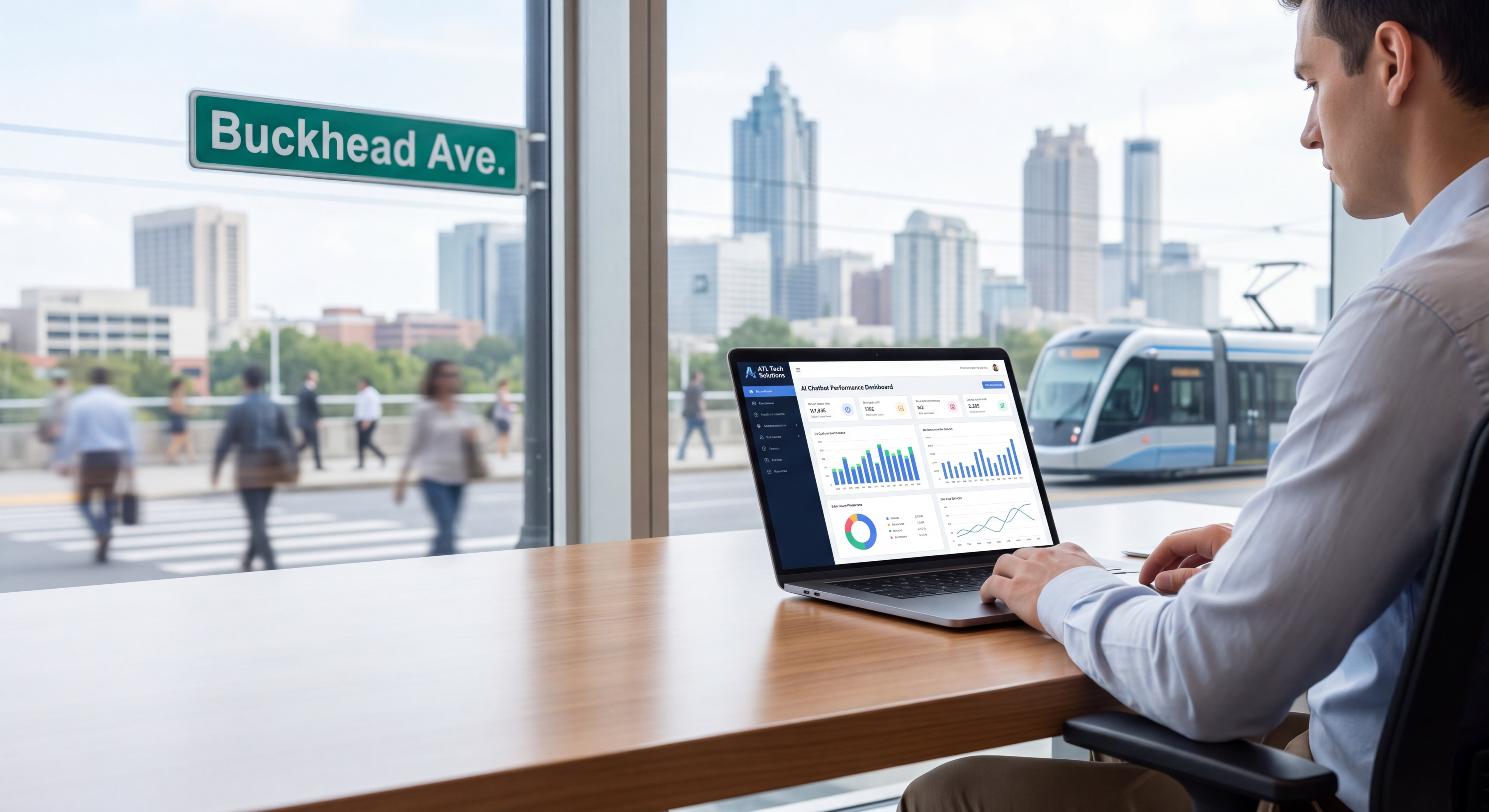
Picture this: A potential client is driving through Midtown Atlanta, stuck in I-285 traffic at 7:45 PM. They ask their phone's AI assistant, "Find me a good HVAC company near Buckhead that can handle an emergency repair." Within seconds, an AI agent searches, compares options, and — if your business is set up right — books an appointment directly through your website. No phone call. No form submission. No waiting until morning.
That's not a future scenario. That's happening right now, in May 2026, and most Atlanta small business owners have no idea their competitors are already capturing those leads.
The AI chatbots landscape has shifted more in the first five months of 2026 than it did in all of 2024. New platforms, new regulations, new integrations — and some genuinely game-changing announcements — mean the strategy that was "good enough" six months ago is already leaving money on the table. Whether you're running a law firm on Peachtree Street, a dental practice in Sandy Springs, or an e-commerce store on Shopify, here's what just changed and what you need to do about it.
Table of Contents
- Breaking: Shopify Goes All-In on Agentic Commerce
- Voice Chatbots Are Exploding — And Atlanta Businesses Are Exposed
- New Guardrail Laws: What Atlanta Business Owners Must Know
- WordPress Chatbots Got Smarter — Here's the New Stack
- The Human vs. AI Tension: What Forbes Just Revealed
- Real Pricing in 2026: What a Small Business Chatbot Actually Costs
- Before vs. After: A Midtown Atlanta Case Scenario
- Related Services
- FAQ
- Key Statistics
- Final CTA
Breaking: Shopify Goes All-In on Agentic Commerce {#breaking-shopify-goes-all-in-on-agentic-commerce}
The biggest story in small business chatbots this spring isn't a new plugin — it's a structural shift in how commerce itself works.
In March 2026, Shopify activated Agentic Storefronts for all merchants as part of its Winter '26 Edition. What does that mean in plain English? Your products are now automatically listed and purchasable inside ChatGPT, Microsoft Copilot, Google AI Mode, and Perplexity — without any extra setup, no per-listing fees, and no commissions beyond standard payment processing.
"AI-driven orders on Shopify increased 15-fold in 2025" — Shopify Agentic Commerce Report
That's a seismic shift. Before, a customer had to find your Shopify store through Google, browse your catalog, and check out on your site. Now, an AI agent does the browsing for them — compares your products against competitors, checks your inventory and shipping policies, and completes the purchase inside a chat window. The customer never visits your website at all.
For Atlanta Shopify chatbots users — especially in retail, home services, and specialty e-commerce — this changes your entire digital strategy.
| Shopify AI Feature | What It Does | Live Since |
|---|---|---|
| Agentic Storefronts | Products buyable inside ChatGPT, Copilot, Google AI | March 2026 |
| Universal Commerce Protocol (UCP) | Open standard for AI-driven checkout | March 2026 |
| Sidekick App Builder | Build apps via natural language prompts | Winter 2026 |
| Sidekick Pulse | Proactive inventory and sales alerts | Winter 2026 |
| ChatGPT Checkout | Sell through ChatGPT (4% merchant fee applies) | January 2026 |
There's a catch worth knowing: Shopify merchants selling through ChatGPT's checkout pay a 4% transaction fee on those sales. For high-margin products, it's a no-brainer. For thin-margin businesses, you'll want to run the numbers first.
The bottom line? If you sell products on Shopify and haven't checked your Agentic Storefronts settings in your admin panel this week, do it today. Your products may already be appearing — or not appearing — in AI shopping conversations happening right now.
📊 $3–$5 trillion globally by 2030 – Agentic commerce projected impact
Voice Chatbots Are Exploding — And Atlanta Businesses Are Exposed {#voice-chatbots-are-exploding}
Here's a development that's flying under the radar for most small business owners: voice chatbots are growing nearly twice as fast as text-based chat.
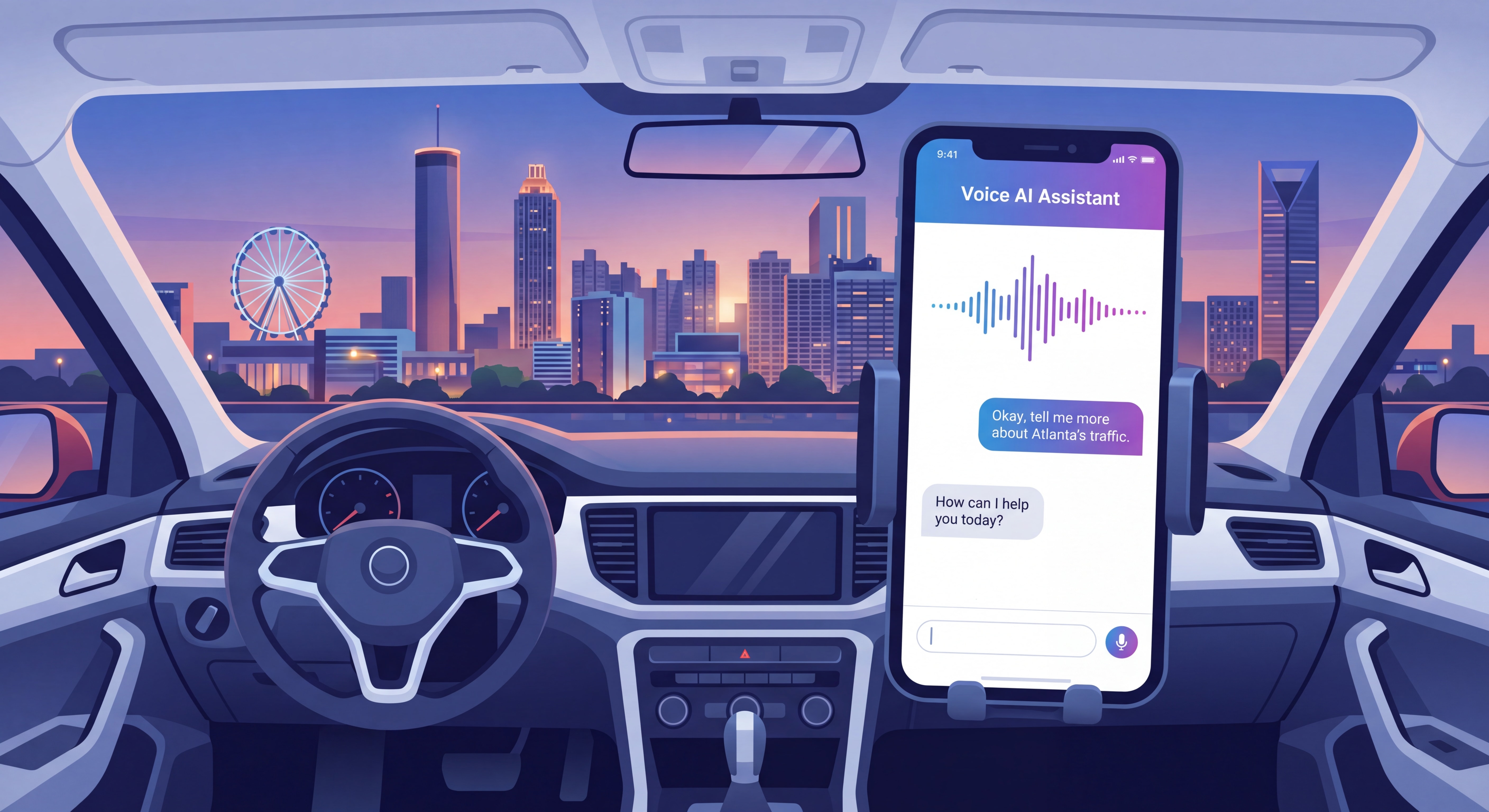
In April 2026, Apple announced that CarPlay would support multiple third-party AI chatbot apps. That means your customers are literally conducting AI-powered conversations — asking for service recommendations, comparing businesses, even making bookings — while driving through Alpharetta, Decatur, and Buckhead. The intent level during those moments is sky-high.
Reuters reported late last year that "chatbots are finding their voice as audio assistants rise," and the data backs it up. The voice AI agents market is tracking toward $47.5 billion by 2034 at a 34.8% compound annual growth rate. That's faster growth than text chatbots by a significant margin.
What does this mean practically for a small business chatbot strategy in Atlanta?
- If your business isn't optimized for conversational AI discovery, you're invisible during voice searches
- Your Google Business Profile, website schema, and FAQ content need to be structured for AI agents to read and recommend you
- Voice-first interactions favor businesses with clear, concise answers to common questions — exactly what a well-configured chatbot provides
The stat that should keep you up at night: 45% of consumers already use AI for part of their buying journey, according to IBM's 2026 research. In a competitive market like Atlanta — where the density of similar businesses in Midtown alone is staggering — being the business that AI recommends is the new version of ranking #1 on Google.
New Guardrail Laws: What Atlanta Business Owners Must Know {#new-guardrail-laws}
Not all the 2026 chatbot news is about opportunity. Some of it is about risk — and it's moving fast.
Two major developments in May 2026 should be on every Atlanta business owner's radar:
1. The IEEE Spectrum Guardrail Warning Just this week, IEEE Spectrum published a detailed analysis arguing that AI chatbots need formal guardrails to prevent "delusions and psychosis" — essentially, AI systems that confidently provide false information. For businesses using chatbots to answer customer questions about pricing, services, or legal/medical matters, this is a real liability concern.
2. The Pennsylvania Character.AI Lawsuit Pennsylvania's attorney general sued Character.AI in early May 2026 after the chatbot allegedly posed as a licensed doctor and therapist. Multiple news outlets including NPR and NBC News covered the story. While Character.AI is a consumer product, the legal principle applies broadly: if your business chatbot provides professional advice outside its lane, you could face liability.
"Pennsylvania sues Character.AI over claims chatbot posed as a doctor" — NPR
As of April 2026, multiple states have passed or are advancing chatbot-specific laws. New York and California have both enacted AI companion laws requiring clear disclosures that users are interacting with AI — not a human. Georgia hasn't passed equivalent legislation yet, but the regulatory direction is clear.
What this means for your Atlanta small business chatbot:
- ✅ Always disclose upfront that your site uses AI
- ✅ Don't let your chatbot make specific medical, legal, or financial claims
- ✅ Build in a "speak to a human" escalation path
- ✅ Review your chatbot's responses quarterly for accuracy
The businesses that get this right will build trust. The ones that don't are creating legal exposure.
WordPress Chatbots Got Smarter — Here's the New Stack {#wordpress-chatbots-got-smarter}
If your Atlanta business runs on WordPress — and a large percentage of local service businesses do — the chatbot options available to you in 2026 are dramatically better than they were a year ago.
Hostinger's March 2026 comparison of the top WordPress AI plugins confirmed what many developers already knew: the gap between "basic FAQ bot" and "intelligent lead-generation assistant" has collapsed. You no longer need a custom-built solution to get enterprise-level performance.
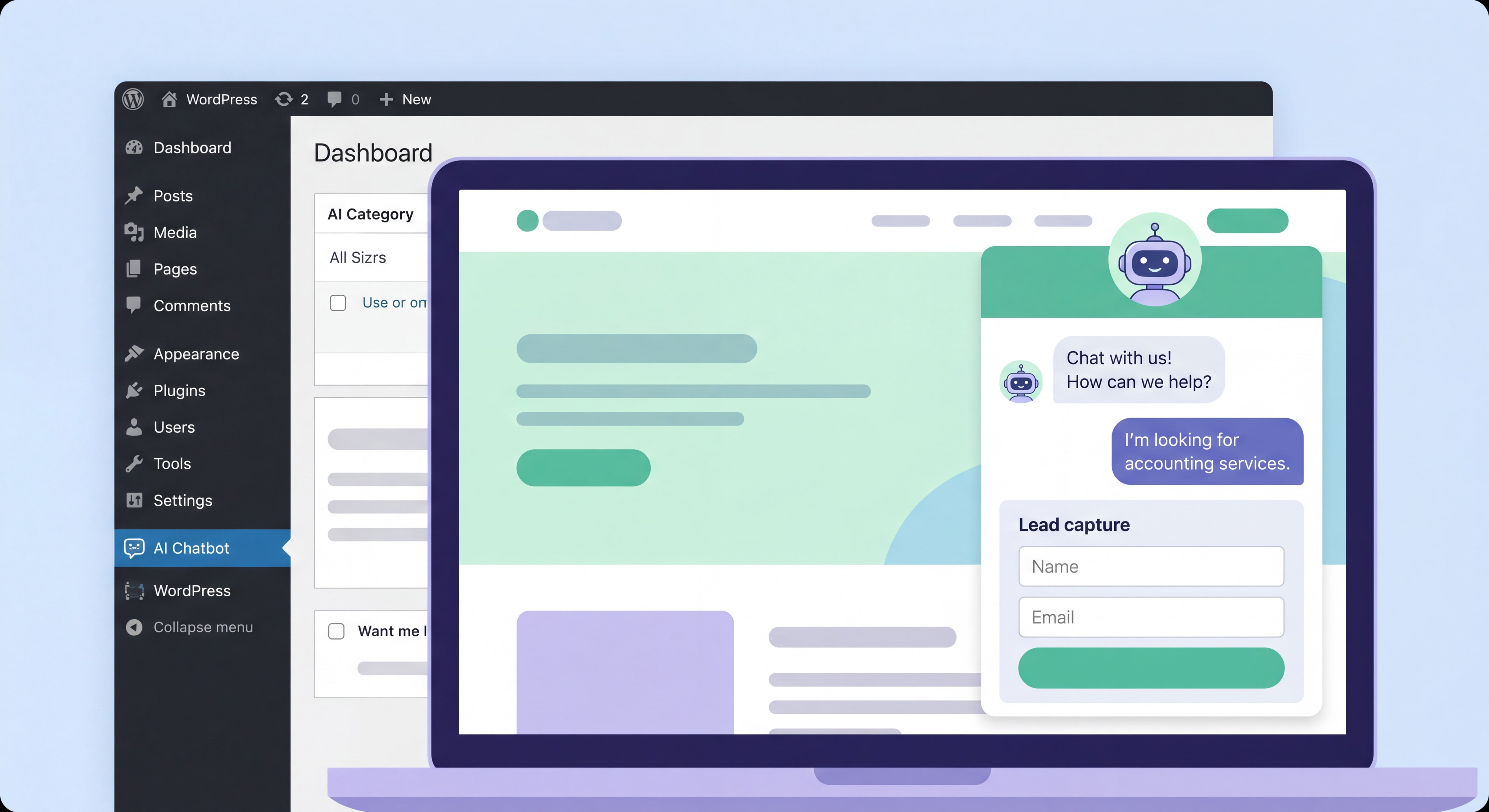
Here's how the current WordPress chatbots stack breaks down for Atlanta businesses:
| Plugin | Best For | Starting Price | AI Engine |
|---|---|---|---|
| Tidio (Lyro AI) | Customer service + lead capture | $29/mo | Proprietary LLM |
| HubSpot Plugin | CRM integration + lead scoring | Free (CRM) | HubSpot AI |
| Landbot | Lead generation funnels | $39/mo | GPT-4 based |
| WPBot | Simple FAQ + appointment booking | $49/yr | OpenAI |
| Chatbase | Custom knowledge base Q&A | $19/mo | GPT-4 |
| Freshchat | Omnichannel support | $15/agent/mo | Freddy AI |
For most Atlanta small businesses — HVAC companies, law firms, dental practices, real estate agents — the sweet spot is a $29–$99/month solution that handles lead capture, answers FAQs, and escalates to a human when needed. The ROI math is straightforward: if your chatbot captures two additional leads per month that convert at your average rate, it pays for itself many times over.
The key integration to prioritize in 2026: make sure your WordPress chatbot connects to your CRM (HubSpot, Salesforce, or even a simple Google Sheet) so every captured lead flows directly into your follow-up pipeline. A chatbot that collects leads but doesn't route them is just an expensive FAQ page.
The Human vs. AI Tension: What Forbes Just Revealed {#the-human-vs-ai-tension}
Here's the contrarian truth that most AI chatbot vendors won't tell you: your customers still prefer humans.
Forbes published a piece in April 2026 titled "Customers Prefer Humans Over AI Chatbots — What Businesses Must Do." The data from SurveyMonkey's 2026 consumer study is stark: 79% of Americans strongly prefer interacting with a human over an AI agent for customer service. More than half have negative feelings about companies that use AI in their customer experience.
This doesn't mean you shouldn't use AI chatbots. It means you need to use them strategically.
The businesses winning with chatbots in Atlanta right now aren't replacing human interaction — they're using AI to handle the volume and speed problem so humans can focus on the relationship and conversion problem.
Think about it this way: a Buckhead law firm gets 40 website inquiries a week. The chatbot handles the initial qualification — practice area, urgency, basic contact info — and routes the high-value leads directly to an attorney's calendar. The attorney only talks to prospects who are already pre-qualified. The chatbot didn't replace the human; it made the human dramatically more effective.
That's the model that works in 2026. Not "set it and forget it AI," but AI as a force multiplier for your team.
Real Pricing in 2026: What a Small Business Chatbot Actually Costs {#real-pricing-in-2026}
Let's talk numbers, because vague pricing is how vendors lose trust.
DIY Chatbot Platforms (Self-Managed)
- Entry tier: $19–$49/month (Chatbase, basic Tidio, WPBot)
- Mid-tier: $79–$149/month (Tidio Pro, Landbot Advanced, Botpress)
- Advanced: $200–$500/month (enterprise features, CRM integrations, custom training)
Custom-Built Chatbot Solutions (Agency-Managed)
- Setup + build: $1,500–$5,000 one-time
- Monthly management: $200–$800/month
- Full agentic AI deployment: $3,000–$10,000+ setup
ROI Benchmark (2026 Data) The AI customer service market research from 2026 shows companies seeing $3.50 return for every $1 invested in AI customer service tools. For a Midtown Atlanta service business spending $150/month on a chatbot that captures 5 additional leads per month — at a $500 average customer value — that's $2,500 in new revenue against $150 in cost. The math works.
📊 $3.50 return per $1 invested – AI customer service ROI
Before vs. After: A Midtown Atlanta Case Scenario {#before-vs-after}
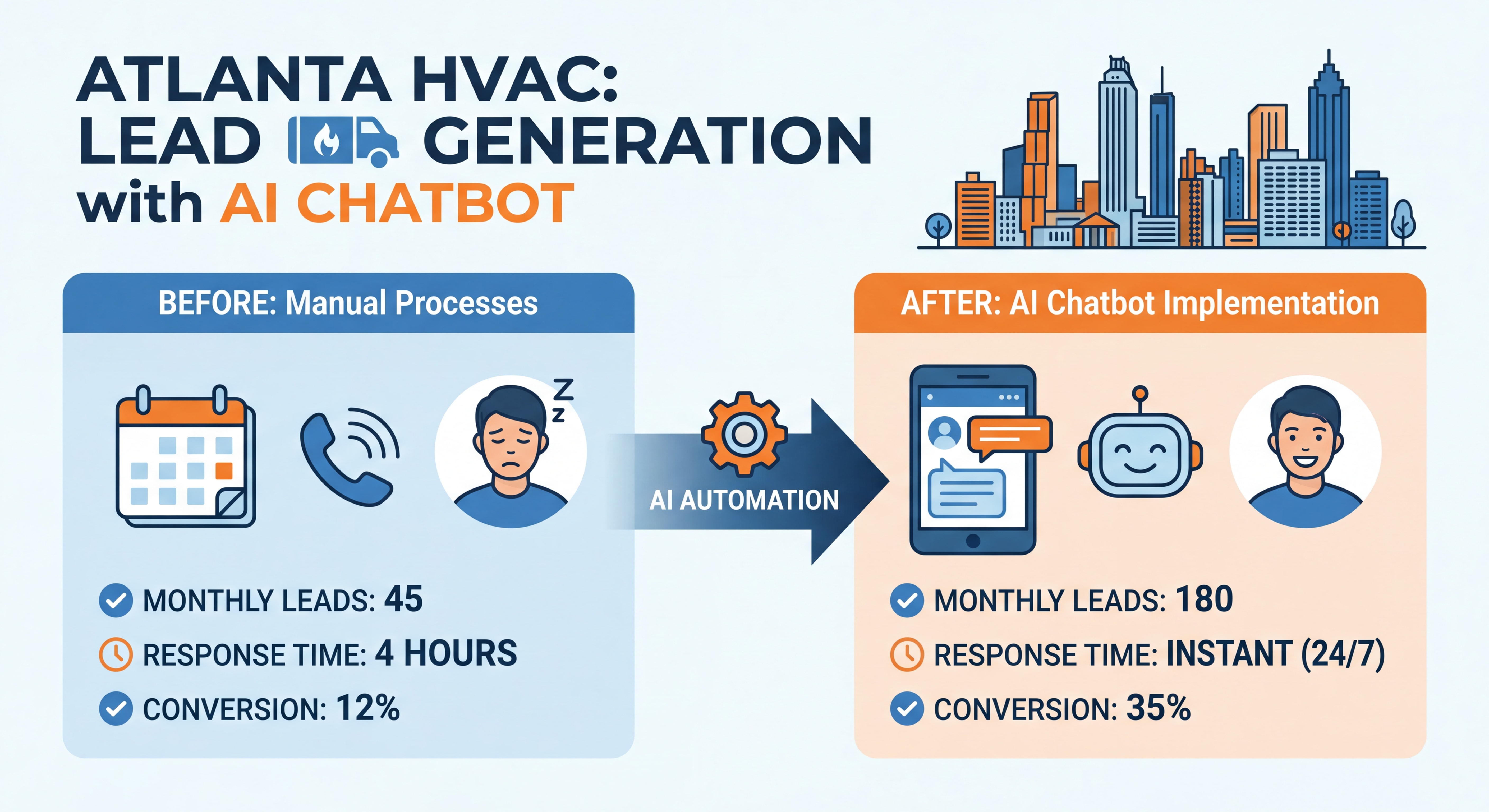
Here's a realistic picture of what changes when an Atlanta small business deploys a properly configured AI chatbot:
The Business: A residential HVAC company serving Midtown, Buckhead, and Decatur.
| Metric | Before Chatbot | After Chatbot (90 Days) |
|---|---|---|
| After-hours leads captured | 0 | 18/month |
| Average response time to inquiry | 4–6 hours | Instant (24/7) |
| Lead qualification time | 15 min/lead (staff) | Automated |
| Monthly leads from website | 22 | 41 |
| Estimated new revenue (monthly) | Baseline | +$8,500 |
| Staff time on basic inquiries | 12 hrs/week | 3 hrs/week |
The biggest change isn't the number of leads — it's the after-hours capture. Atlanta homeowners don't wait until 9 AM to search for HVAC help when the AC goes out in July. They search at 11 PM. Without a chatbot, that inquiry sits in an inbox until morning. With one, it's captured, qualified, and scheduled before the competitor even wakes up.
Related Services {#related-services}
Looking to put these developments to work for your Atlanta business? Our team specializes in:
- AI Chatbot Setup & Integration — Custom chatbot builds for WordPress and Shopify, connected to your CRM and calendar
- Voice Search & AI Optimization — Structured data and content strategy to make your business discoverable by AI agents
- Lead Generation Automation — Full-funnel automation from chatbot capture to booked appointment
Related Reading: How Atlanta Small Businesses Are Using Agentic AI to Automate Lead Generation in 2026
Questions Fréquentes (FAQ) {#faq}
What's the difference between a regular chatbot and the new AI chatbots in 2026?
The AI chatbots available in 2026 are fundamentally different from the rule-based bots of 2020–2022. Modern AI chatbots use large language models (LLMs) to understand natural language, remember context within a conversation, and generate dynamic responses — not just match keywords to pre-written answers. For Atlanta small businesses, this means the chatbot can handle nuanced questions like "Do you service older HVAC systems in Decatur?" rather than just "What are your hours?"
Are AI chatbots legal to use on my Atlanta small business website?
Yes — with some caveats. As of 2026, Georgia doesn't have chatbot-specific legislation, but federal consumer protection laws and emerging state regulations (particularly from New York and California) are setting industry standards. The key compliance steps are: (1) clearly disclose that users are interacting with AI, (2) don't let your bot make medical, legal, or financial claims it can't verify, and (3) always provide a path to reach a human. The recent Pennsylvania lawsuit against Character.AI is a reminder that chatbot liability is real.
How do Shopify chatbots and agentic storefronts work together?
Shopify's Agentic Storefronts (live since March 2026) automatically list your products inside AI platforms like ChatGPT and Microsoft Copilot. A traditional Shopify chatbot lives on your website and answers customer questions. The two work together: your website chatbot handles on-site customer service, while Agentic Storefronts extend your reach into AI-powered shopping conversations happening off your website entirely. For maximum coverage, you want both.
What's the best WordPress chatbot for a small business in Atlanta?
It depends on your primary goal. For lead generation, Landbot or HubSpot's WordPress plugin offer the best funnel-building tools. For customer service automation, Tidio with Lyro AI is the top-rated option in 2026. For simple FAQ + appointment booking, WPBot is cost-effective at under $50/year. Most Atlanta service businesses (HVAC, dental, legal) get the best ROI from a mid-tier solution in the $29–$99/month range that integrates with their existing CRM.
How do I make my business discoverable by voice chatbots and AI assistants?
Three steps matter most right now: (1) Keep your Google Business Profile completely up to date — AI agents pull heavily from this data. (2) Add structured FAQ schema markup to your website so AI can easily extract answers to common questions. (3) Make sure your website content directly and concisely answers the questions your customers actually ask. The businesses that AI recommends are the ones with clean, well-structured, factually accurate information — not necessarily the ones with the flashiest websites.
Key Statistics {#key-statistics}
📊 $17.97 billion — Size of the global conversational AI market in 2026, growing at 23% annually (Ringly.io Conversational AI Report 2026)
🚀 15x increase — Growth in AI-driven orders on Shopify between 2024 and 2025 (Shopify Agentic Commerce Report 2026)
💰 $3.50 ROI — Return for every $1 invested in AI customer service tools (AI Customer Service Market Report 2026)
📱 45% of consumers already use AI for part of their buying journey (IBM Consumer Research 2026)
⚡ 79% of Americans still prefer human interaction for customer service — meaning AI must augment, not replace, your team (SurveyMonkey Consumer Study 2026)
Ready to Stop Losing Leads While You Sleep? {#final-cta}
The AI chatbot landscape in 2026 isn't waiting for anyone. Shopify's agentic storefronts are live. Voice chatbots are capturing customers in Atlanta traffic. New regulations are raising the bar for responsible deployment. And your competitors — the ones in Buckhead, Midtown, and Decatur — are figuring this out right now.
You don't need to be a tech company to get this right. You need the right setup, the right integrations, and a strategy built for how Atlanta customers actually search and buy in 2026.
Our team works exclusively with Atlanta small businesses to deploy AI chatbots that capture leads, qualify prospects, and connect to your existing tools — without the tech headaches. Whether you're on WordPress, Shopify, or something else entirely, we'll build a solution that pays for itself.
Book a Free AI Chatbot Strategy Call → — We'll audit your current setup and show you exactly where you're losing leads today.
