 Shopify developer Atlanta
 professionals and local ecommerce businesses are waking up to a seismic shift — and it’s happening right now, in 2026. From Atlanta’s own tech startups rewriting the rules of online visibility to sweeping industry announcements that are transforming ecommerce web design worldwide, the pace of change has never been faster. If you’re a Georgia-based brand still relying on a static, outdated website, this is your urgent wake-up call.
In this article, we break down the
7 most important breaking developments impacting website development in Atlanta, what they mean for your Shopify store, and how forward-thinking businesses are already capitalizing on them.
Table of Contents
Atlanta’s Own Tech Scene Is Rewriting the Rules
The Atlanta tech ecosystem is buzzing — and not just because of the city’s legendary hospitality industry or booming logistics sector. In March 2026, a
critical story broke out of Atlanta’s own startup community that every ecommerce brand in the region needs to understand.
Searchbird, an Atlanta-based startup covered by
Hypepotamus, announced it is building a website development and marketing platform purpose-built for what it calls the “AI Age.” The company’s platform is built around both
SEO (Search Engine Optimization) and GEO (Generative Engine Optimization) — a brand-new discipline designed to ensure businesses remain visible not just on Google, but inside AI assistants like ChatGPT and other large language models.
“We view SEO and GEO as a long-term game focused on building brand value,” said Searchbird co-founder Lukens.
“Search is fragmenting fast, and Atlanta startups are building the infrastructure to keep businesses visible in the AI era”
— Hypepotamus
This is a
watershed moment for website development in Atlanta. The rules of online visibility are being rewritten in real time, and businesses that fail to adapt their ecommerce web design strategy to accommodate AI-driven search will simply disappear from their customers’ radar.
Also in March 2026,
The Scale Tech, another Atlanta-based firm, published findings identifying a critical shift in corporate web strategy — positioning what they call the
“Digital Blueprint” as a core business asset rather than a marketing afterthought. The announcement, reported by Burlington Free Press, signals that Atlanta’s most progressive companies are now treating their website as infrastructure — on par with their physical offices and supply chains.
📊
34% increase in corporate web investment in Georgia – Atlanta tech companies adopting “Digital Blueprint” strategies
Shopify’s Agentic Commerce Revolution Has Arrived
Perhaps the single most disruptive development for any
Shopify developer in Atlanta right now is the rise of
agentic commerce — and it is no longer a future concept. It is happening today.
In early 2026, Shopify officially launched its
Model Context Protocol (MCP) endpoint, enabling AI agents to autonomously discover products, add items to cart, and complete purchases on Shopify stores — all without human intervention. Google’s
Universal Commerce Protocol (UCP), launched at NRF in January 2026, supercharged this capability further.
What does this mean practically? AI assistants like ChatGPT and Google’s AI Overviews can now shop directly from your Shopify store on behalf of your customers. If your store’s product pages, catalog architecture, and checkout flows aren’t structured for AI agent readability, you are already losing sales.
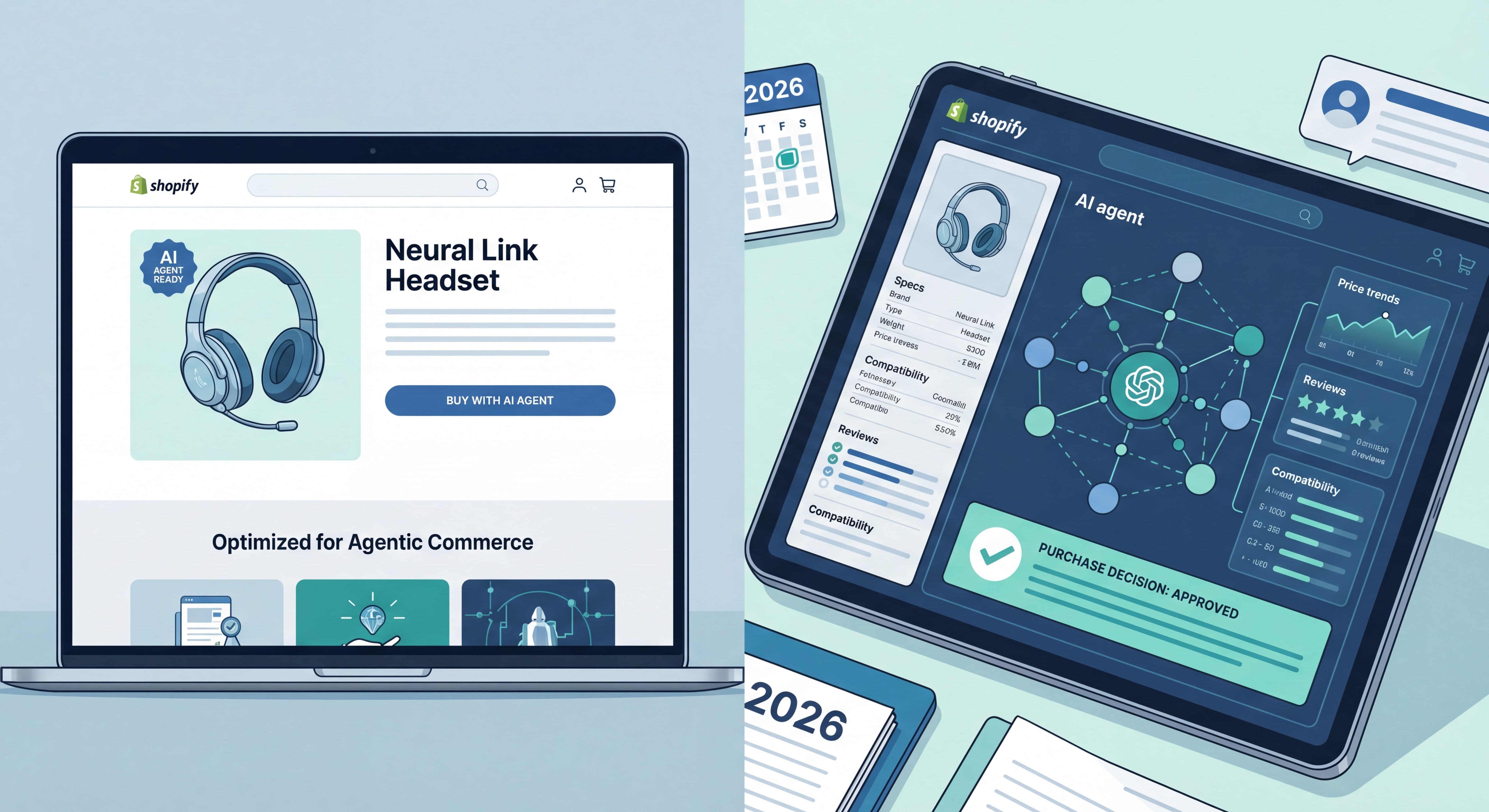
According to research from Morgan Stanley cited by Elogic Commerce,
AI agents could influence up to $385 billion in U.S. ecommerce by 2030, with roughly 33% of online retailers expected to use advanced AI agents by 2028. The window to get ahead of this curve is right now — and Atlanta Shopify developers who understand agentic readiness are already in high demand.
📊
$385 billion in U.S. ecommerce by 2030 – AI agentic commerce projected market influence
For Atlanta brands, this means working with a
Shopify developer in Atlanta who understands not just beautiful storefront design, but the technical architecture of MCP endpoints, structured product data, and JSON-LD schema — the invisible infrastructure that AI agents rely on to make purchasing decisions.
Ecommerce Web Design in 2026: What Just Changed
The
ecommerce web design landscape has undergone a dramatic transformation in the opening months of 2026. Several major trends have crystallized from “emerging” into “essential” almost overnight:
1. Bento Grid Layouts Are Replacing Traditional Design
Inspired by modern tech dashboards, modular “Bento Grid” layouts are now the dominant design pattern for high-converting Shopify stores. These box-based, card-style layouts improve visual hierarchy and are inherently more scannable on mobile devices — critical in a world where
over 70% of U.S. ecommerce traffic now comes from smartphones.
2. Scrollytelling: Static Pages Are Dead
Static product pages are being replaced by
scrollytelling — interactive, scroll-triggered animations that guide users through a brand narrative before they even see the price. Atlanta’s culturally driven D2C brands, many of which are building social-commerce-first business models, are early adopters of this technique.
3. AI-Driven Dynamic Personalization Is Now Table Stakes
In 2026, showing the same homepage to every visitor is no longer acceptable. The latest ecommerce web design frameworks — including Shopify’s native personalization tools — now enable dynamic content blocks that change based on location, browsing history, and purchase intent. Atlanta Shopify developers are integrating these features as standard practice.
4. Green UX and Core Web Vitals
Google has confirmed that faster, resource-efficient sites receive preferential treatment in rankings through Core Web Vitals.
Green UX — designing for energy efficiency and speed — has gone from a niche philosophy to an SEO necessity.
| Design Trend |
Impact on Conversions |
Adoption Rate (2026) |
| Bento Grid Layouts |
+18% avg. engagement |
High |
| Scrollytelling |
+23% time on page |
Growing |
| AI Personalization |
Up to +40% revenue |
Medium-High |
| Mobile-App-Like UI |
+15% mobile conversions |
Very High |
| Green UX / Speed |
+12% SEO visibility |
Universal |
Breaking: Major Ecommerce Service Expansions Hit the Market
April 14, 2026 — Just yesterday,
USA Today reported that
JDM Web Technologies announced a major expansion of its web design, ecommerce development, and website maintenance services. This announcement is part of a broader industry wave: ecommerce service providers are racing to scale capacity in response to surging demand from businesses that recognize the urgency of digital transformation.
“JDM Web Technologies Announces Web Design, Ecommerce and Website Maintenance Service Expansion”
— USA Today / Globe Newswire
This expansion reflects a pattern we’re seeing across the board:
ecommerce web design agencies are growing at an accelerated pace because businesses can no longer afford to delay their digital investments. For Atlanta companies, this means increased competition for the best Shopify developers — and a premium on agencies with proven track records in conversion-optimized, technically sophisticated store builds.
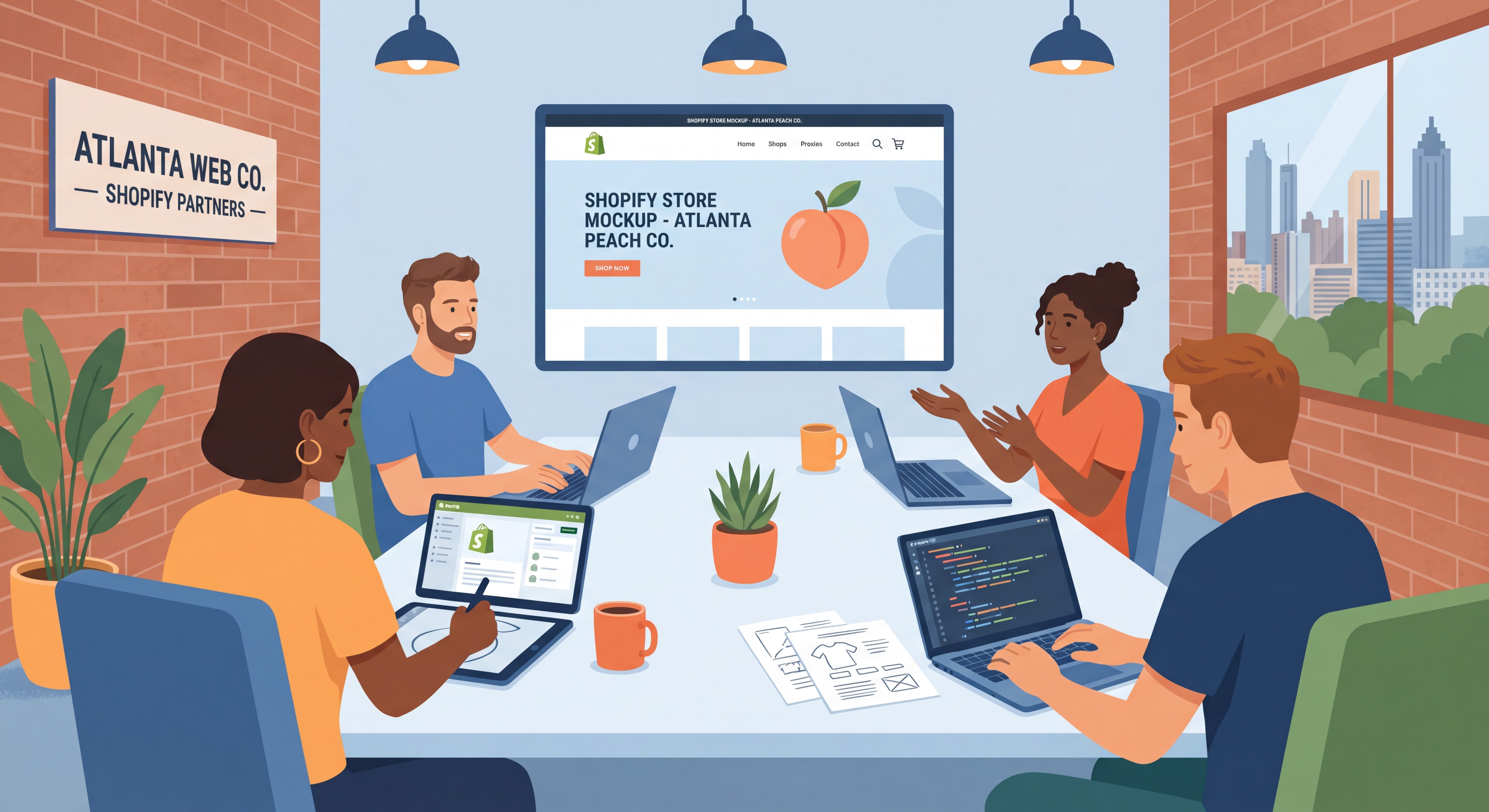
Meanwhile, Georgia continues to produce a wave of
culturally driven D2C brands out of Atlanta that are building social-commerce-first business models from day one, according to a 2026 ecommerce platform development analysis. These brands require Shopify developers who understand not just code, but brand storytelling, social commerce integrations, and the unique consumer culture of the Atlanta market.
Atlanta’s Digital Blueprint Moment
The
Technology Association of Georgia (TAG) made headlines on April 1, 2026, announcing its
2026 Top 40 Innovative Companies in Georgia — a list that underscores the city’s explosive growth as a technology hub. TAG also announced a partnership with
Atlanta AI Week, taking place April 20–22, 2026 at Atlanta Tech Village, where leaders are gathering to shape the future of AI in business.
This is the context in which
website development in Atlanta is operating right now. The city is home to a thriving, interconnected ecosystem of tech companies, D2C brands, logistics providers, and digital agencies — all competing for online market share in an environment where the rules are changing faster than ever.
For ecommerce brands in Atlanta, the message is clear: your website is no longer just a digital brochure. It is your
most critical business asset — a living, evolving platform that must perform flawlessly across AI search, mobile commerce, social channels, and traditional web browsing simultaneously.
The best
Shopify developers in Atlanta understand this new reality. They build stores that are:
- AI-agent ready — structured for agentic commerce and GEO
- Mobile-first — designed as app-like experiences, not desktop pages shrunk down
- Conversion-optimized — using data-driven design patterns that drive measurable revenue
- SEO and GEO-aligned — visible to both Google and AI assistants
- Scalable — built on headless Shopify architecture for enterprise-grade performance
Global Ecommerce Sales Hit New Records — What Atlanta Brands Must Do Now
The macro numbers tell an undeniable story. According to Shopify’s own
Global Ecommerce Sales Growth Report (2026):
- Global ecommerce sales are forecast to reach $6.88 trillion in 2026 — a 7.2% increase from 2025
- Ecommerce now makes up 21.1% of total retail sales globally
- Shopify currently powers 4.8 million active stores worldwide, supporting 26.2% of all ecommerce websites
📊
$6.88 trillion — a 7.2% year-over-year increase – Global ecommerce sales 2026
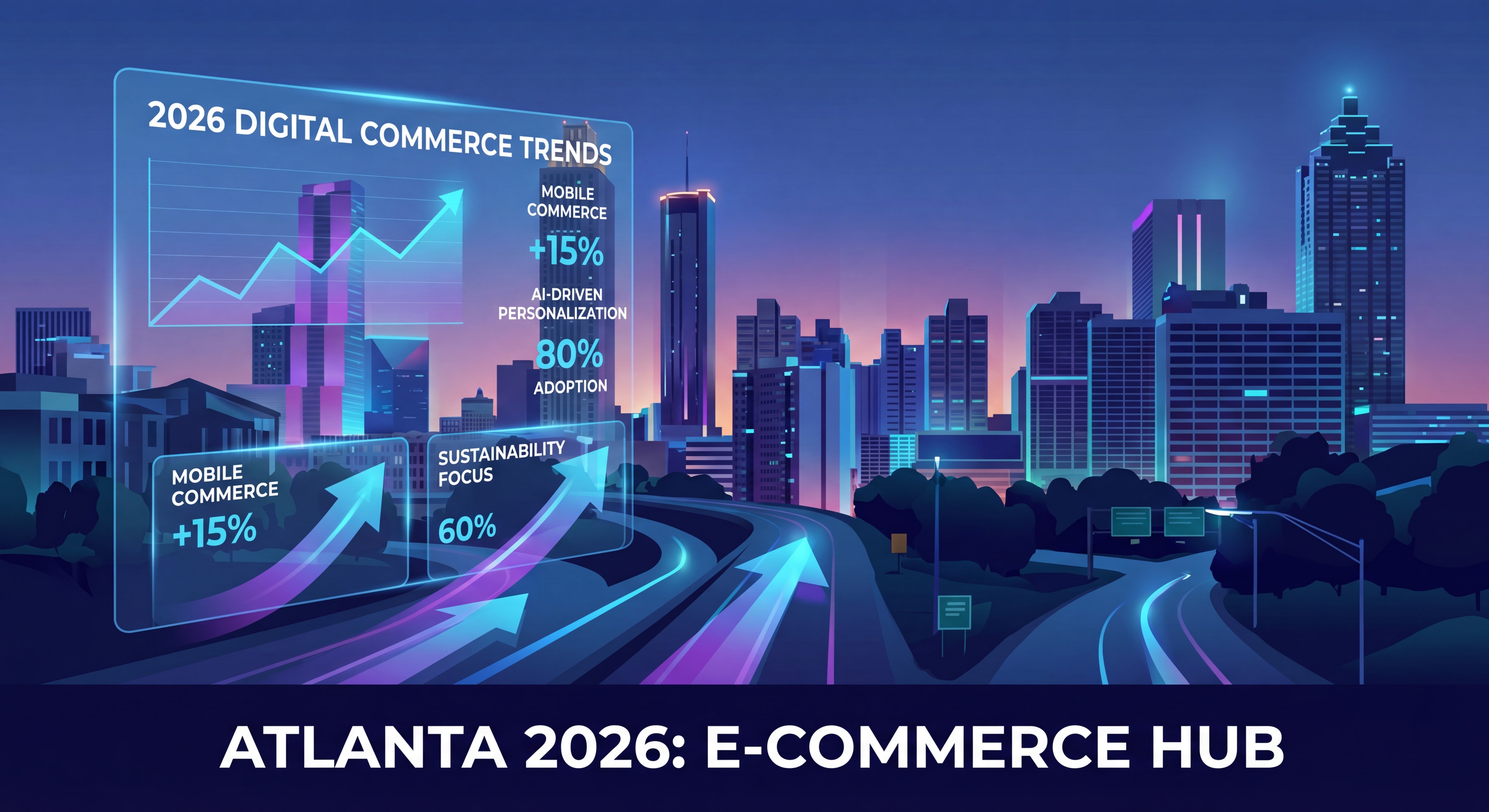
For Atlanta businesses, these numbers represent both an enormous opportunity and a stark competitive reality. Every dollar of that $6.88 trillion is being fought over by brands with increasingly sophisticated ecommerce web design, AI-powered personalization, and technically expert Shopify development teams behind them.
The brands winning in Atlanta right now are those that invested in
professional Shopify development 12–18 months ago. The brands that will dominate in 2027 are the ones making those investments today.
The 2026 Shopify Developer Atlanta Checklist
Based on all the breaking developments covered in this article, here is what Atlanta businesses should demand from any
Shopify developer they work with in 2026:
| Capability |
Why It Matters in 2026 |
Priority |
| Agentic Commerce / MCP Setup |
AI agents shop your store autonomously |
🔴 Critical |
| GEO Optimization |
Visibility in ChatGPT, Perplexity, AI Overviews |
🔴 Critical |
| Headless Shopify Architecture |
Speed, flexibility, enterprise scalability |
🟠 High |
| Mobile-First / App-Like UX |
70%+ of traffic is mobile |
🟠 High |
| AI Personalization Integration |
Up to 40% revenue lift |
🟠 High |
| Core Web Vitals Optimization |
Google ranking factor |
🟡 Important |
| Bento Grid / Modern Design |
Conversion-optimized layouts |
🟡 Important |
| Social Commerce Integration |
Atlanta D2C brands need multi-channel |
🟡 Important |
Working with a qualified
Shopify developer in Atlanta who checks all these boxes is no longer a luxury — it is a competitive necessity in the current market.
Conclusion: The Time to Act Is Now
The
7 breaking developments covered in this article — from Atlanta’s Searchbird redefining online visibility, to Shopify’s agentic commerce launch, to the wave of ecommerce service expansions announced this month — all point to the same conclusion:
the ecommerce web design landscape has fundamentally changed in 2026, and Atlanta businesses that move fast will capture enormous market share.
Whether you’re launching a new Shopify store, migrating from a legacy platform, or scaling an existing D2C brand, the right
Shopify developer in Atlanta can be the difference between thriving in this new environment and being left behind. The city’s tech ecosystem is vibrant, the talent is here, and the opportunity is real.
Ready to future-proof your Shopify store for the AI era? Connect with a certified Shopify developer in Atlanta today and get a free audit of your current ecommerce web design — before your competitors do.
Questions Fréquentes (FAQ)
What should I look for in a Shopify developer in Atlanta in 2026?
In 2026, the most critical capabilities to look for are: agentic commerce readiness (MCP endpoint setup), Generative Engine Optimization (GEO) for AI search visibility, headless Shopify architecture experience, mobile-first UX design, and proven conversion optimization skills. Atlanta has a growing ecosystem of qualified Shopify agencies — look for those with verified reviews on platforms like Clutch.co and demonstrated experience with Shopify Plus.
How is ecommerce web design different in 2026 compared to previous years?
Ecommerce web design in 2026 has shifted dramatically toward AI-readiness, mobile-app-like interfaces, and dynamic personalization. The biggest new requirement is designing stores that can be “read” and shopped by AI agents autonomously — a capability that didn’t exist at scale before Shopify’s MCP endpoint launch in 2025/2026. Additionally, design trends like Bento Grid layouts, scrollytelling, and Green UX have moved from experimental to standard practice.
Why is website development in Atlanta growing so fast?
Atlanta has emerged as one of the Southeast’s premier technology hubs, home to a booming D2C brand scene, a growing fintech sector, and a vibrant startup ecosystem recognized by organizations like the Technology Association of Georgia (TAG). The city’s diverse talent pool, competitive market, and cultural influence on consumer brands have made it a hotbed for ecommerce and website development activity. Events like Atlanta AI Week (April 2026) and TAG’s Top 40 Innovative Companies recognition reflect this momentum.
What is agentic commerce and why does it matter for my Shopify store?
Agentic commerce is a new model where AI agents — like those powering ChatGPT, Google AI Overviews, and similar platforms — autonomously research, compare, and purchase products on behalf of consumers. Shopify launched its native MCP (Model Context Protocol) endpoint in 2025, making it possible for AI agents to interact directly with Shopify stores. If your product pages, structured data, and checkout flows aren’t optimized for AI agent readability, you risk being invisible to an increasingly large segment of online shoppers.
How much does it cost to hire a Shopify developer in Atlanta?
Based on current market data from platforms like Clutch.co, Atlanta-based Shopify development agencies typically charge between $150–$199 per hour for specialized Shopify Plus work, with project minimums often starting at $10,000. Full store builds with modern 2026 features (headless architecture, AI personalization, agentic readiness) typically range from $15,000 to $75,000+ depending on complexity. The investment is justified by the revenue impact: AI personalization alone can drive up to 40% revenue increases according to industry data.
Chiffres Clés
📊
$6.88 trillion — Global ecommerce sales forecast for 2026, a 7.2% increase year-over-year
(Source: Shopify Global Ecommerce Sales Growth Report 2026)
🤖
$385 billion — Projected U.S. ecommerce sales influenced by AI agents by 2030
(Source: Morgan Stanley / Elogic Commerce 2026)
📱
70%+ — Share of U.S. ecommerce traffic coming from smartphones in 2026, making mobile-first design non-negotiable
(Source: Ecommerce Platform Development Report 2026)
💡
40% — Revenue increase achievable by ecommerce brands that implement AI-driven personalization in their Shopify stores
(Source: Elogic Commerce AI in Ecommerce Statistics 2026)
Related Services