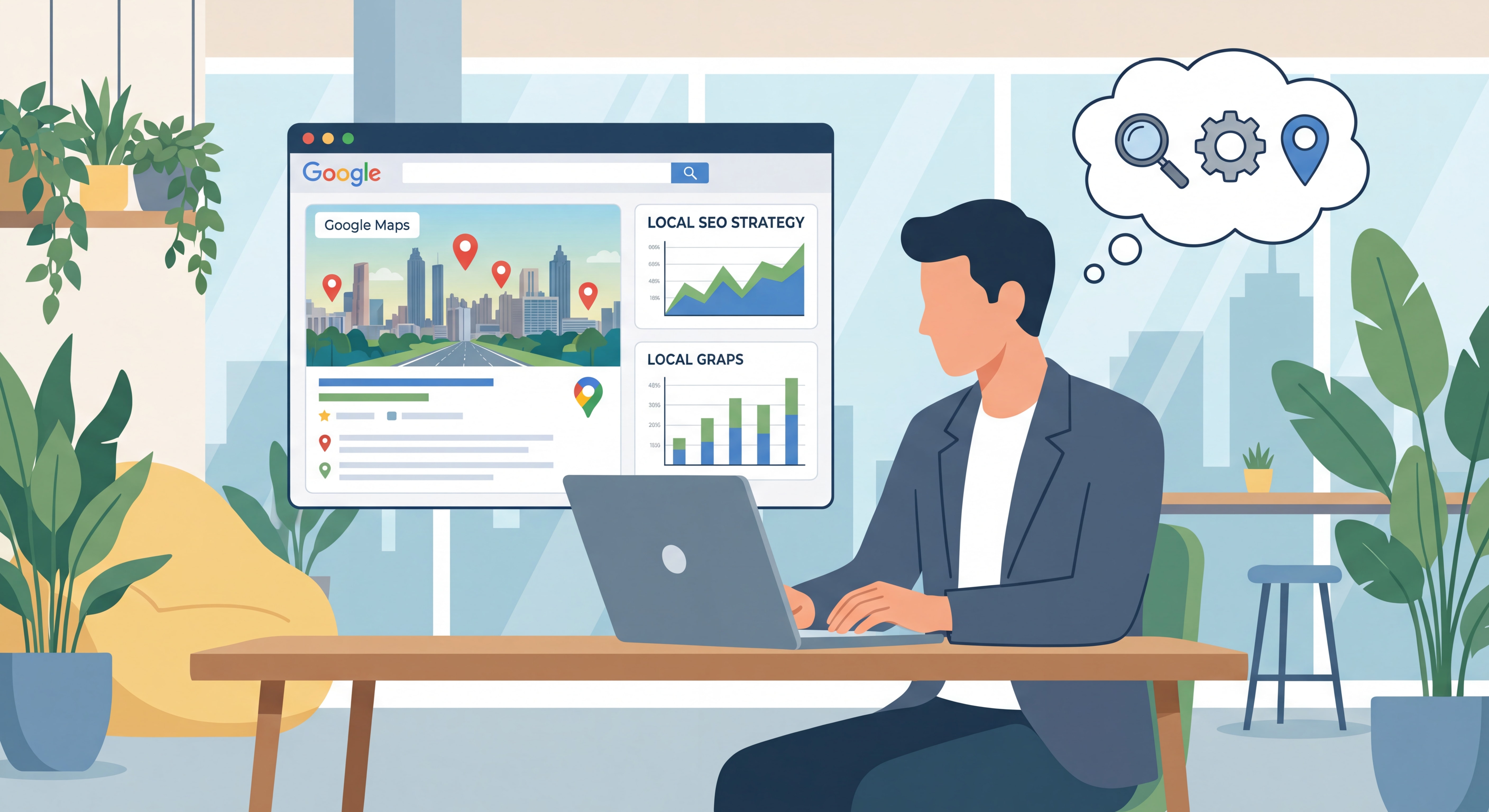
If you're an Atlanta business owner Googling "how much does local SEO cost," you've probably seen quotes ranging from $300 to $5,000 a month — with zero explanation of what separates them. The truth is, local SEO cost in Atlanta varies wildly, and most businesses overpay for services they don't need while underpaying for the ones that actually move the needle.
This guide cuts through the noise. You'll get a practical, step-by-step breakdown of where your SEO budget should actually go, what you can do yourself, and how to stretch every dollar you spend on local SEO services in Atlanta into measurable results.
Table of Contents
- Why Atlanta Local SEO Pricing Is All Over the Map
- The 5 Local SEO Tasks You Can Do Yourself (for Free)
- Where to Spend Your Budget: A Tiered Approach
- Google Maps SEO: The Highest-ROI Channel You're Probably Ignoring
- How AI Chatbots and Shopify Fit Into Your Local SEO Stack
- FAQ
- Key Statistics
- Related Insights
Why Atlanta Local SEO Pricing Is All Over the Map
Atlanta's digital marketing market is competitive and fragmented. You've got boutique agencies charging $500/month for templated reports, national firms billing $4,000/month for the same work, and freelancers offering $199/month packages that amount to little more than a Google Business Profile update.
Google's 2026 local SEO enforcement changes have added another layer of complexity. Recent industry reporting confirms that Google is cracking down on keyword-stuffed business names, fake reviews, and spammy citation practices — tactics that cheap SEO vendors have leaned on for years. If your current provider is using any of these shortcuts, you're not just wasting money. You're accumulating risk.
"Google's 2026 local SEO crackdown is forcing U.S. small businesses to rethink keyword strategies amid tightening enforcement"
— AD HOC NEWS
Here's what legitimate local SEO actually involves:
- Google Business Profile optimization and ongoing management
- Local citation building and cleanup
- On-page SEO for location-specific landing pages
- Review generation strategy
- Google Maps ranking signals (proximity, relevance, prominence)
- Local link building
- Monthly performance reporting
When you understand the components, you can make smarter decisions about which ones to outsource and which ones to handle in-house.
The 5 Local SEO Tasks You Can Do Yourself (for Free)
Before you spend a dollar, lock down these five fundamentals. They're free, they're high-impact, and most Atlanta businesses haven't done them properly.
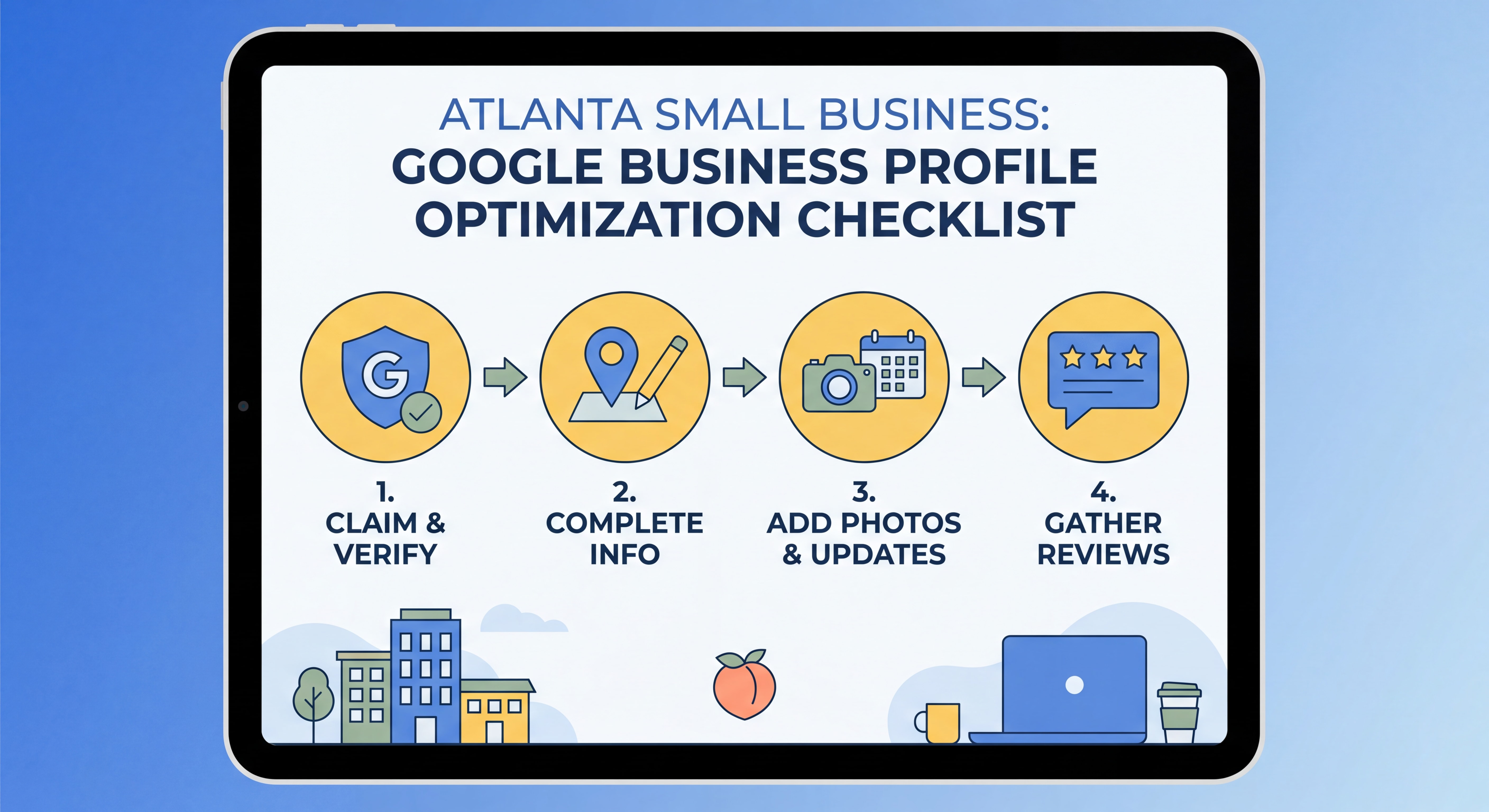
1. Claim and Fully Complete Your Google Business Profile
This is the single highest-leverage action in local SEO. Go through every field — business name (no keyword stuffing, per Google's 2026 guidelines), categories, hours, service areas, products, and Q&A. Upload at least 10 photos. Add a business description that naturally includes your primary service and city.
Pro tip: Choose your primary category with precision. SEO Guru Atlanta recently introduced a tool specifically to help businesses select the right Google Business Profile category — a sign of how much this single choice impacts rankings.
2. Build Your Core Citations Manually
Your NAP (Name, Address, Phone) must be identical across every directory. Start with the big four: Google, Yelp, Facebook, and Apple Maps. Then move to industry-specific directories. Inconsistent citations are a ranking killer — and fixing them is something you can do yourself in an afternoon.
3. Set Up a Review Request System
Reviews are a direct Google Maps ranking signal. Create a simple process: after every completed job or purchase, send a follow-up text or email with a direct link to your Google review page. Aim for 5–10 new reviews per month. This costs nothing but discipline.
4. Add Location Pages to Your Website
If you serve multiple Atlanta neighborhoods — Buckhead, Midtown, Decatur, Sandy Springs — each area deserves its own landing page. These pages should include the neighborhood name, specific services, local references, and a clear call to action. Don't duplicate content; make each page genuinely useful.
5. Optimize Your Title Tags and Meta Descriptions
Every page on your site should have a unique title tag that includes your primary service and "Atlanta" where relevant. This is basic on-page SEO that many local businesses still haven't done. Use a free tool like Google Search Console to identify pages that are missing these elements.
Where to Spend Your Budget: A Tiered Approach
Once the free fundamentals are locked in, here's how to think about paid SEO investment based on your business stage and competitive landscape.
| Budget Tier | Monthly Spend | Best For | Core Deliverables |
|---|---|---|---|
| Starter | $300–$600 | New businesses, low-competition niches | GBP management, citation cleanup, basic reporting |
| Growth | $700–$1,500 | Established businesses in competitive markets | Full on-page SEO, content creation, link building |
| Aggressive | $1,500–$3,000+ | Multi-location or high-competition industries | Advanced content strategy, Google Maps domination, AI-powered tools |
What to watch out for at each tier:
At the Starter level, avoid agencies that promise "top 3 Google Maps rankings" in 30 days. That's not how it works. Look for transparent reporting and clear deliverables.
At the Growth level, insist on monthly calls and access to your own analytics. If an agency won't give you access to Google Search Console and Google Analytics, walk away.
At the Aggressive level, you should be seeing clear attribution — which keywords are driving calls, which pages are generating leads, and what your cost per acquisition looks like.
📊 Businesses investing $1,000–$2,000/month in local SEO report an average 5x return within 12 months – Local SEO ROI
Google Maps SEO: The Highest-ROI Channel You're Probably Ignoring
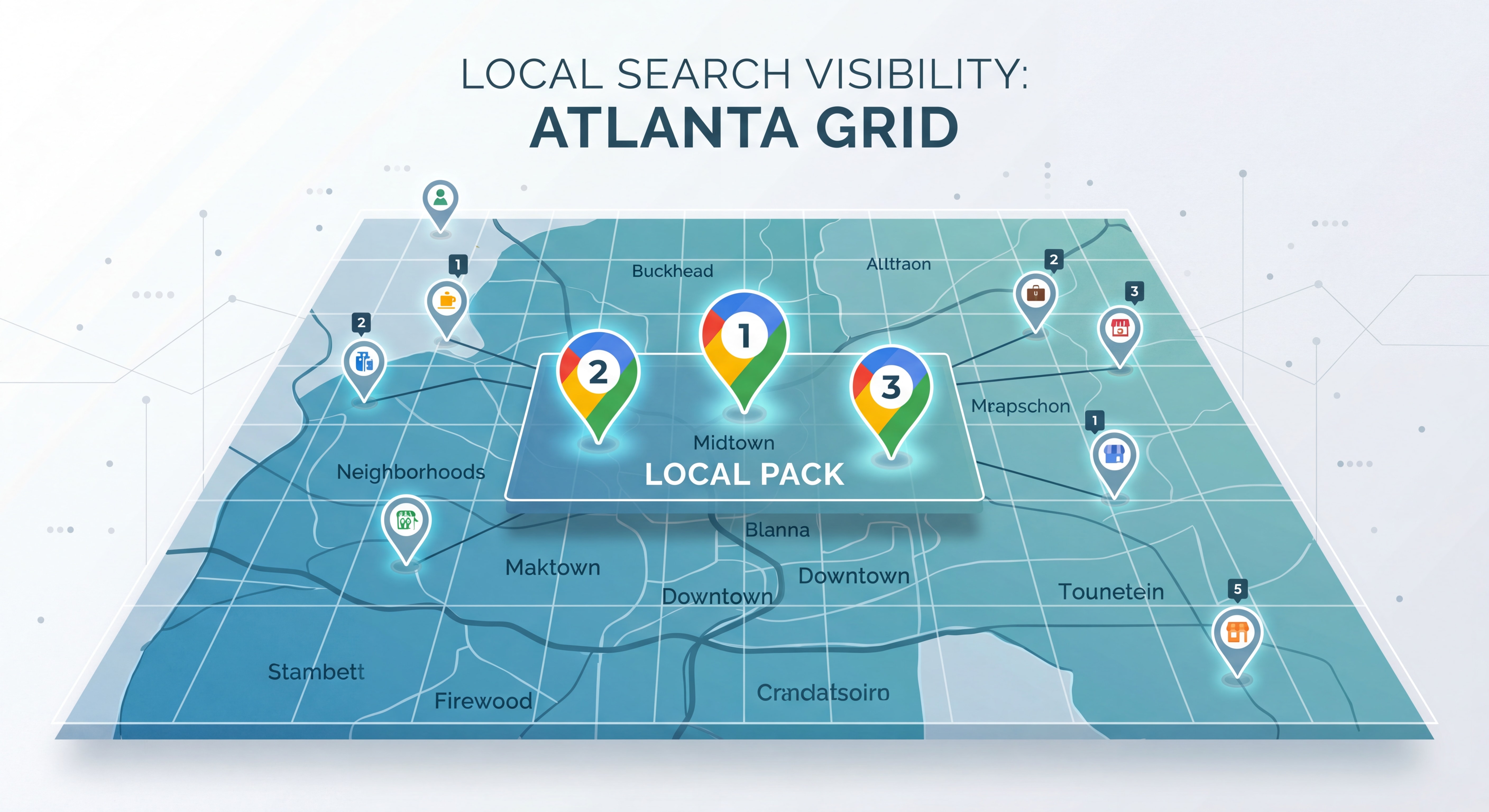
If you're spending money on SEO but not specifically targeting Google Maps rankings, you're leaving money on the table. The Google Maps "Local Pack" — those three business listings that appear at the top of local search results — captures the majority of clicks for high-intent local searches.
Here's a practical framework for improving your Google Maps position:
Step 1: Audit Your Current Map Ranking
Use a tool like Local Falcon or BrightLocal to run a grid-based ranking report. This shows you exactly where you rank across different parts of Atlanta — not just at your business address. Most businesses are shocked to see how quickly their ranking drops off a few miles from their location.
Step 2: Optimize for Proximity Signals
You can't control where searchers are located, but you can optimize for the areas you want to rank in. Create neighborhood-specific content, build citations on locally-relevant directories, and ensure your service area settings in GBP accurately reflect where you operate.
Step 3: Build Prominence Through Local Links
Google's Maps algorithm weighs "prominence" — how well-known your business is online. Local backlinks from Atlanta news sites, neighborhood blogs, chambers of commerce, and industry associations all contribute. This is where professional Google Maps SEO agency work pays off — building these links at scale is time-consuming.
Step 4: Use Posts to Signal Activity
Google Business Profile posts are underused by most Atlanta businesses. Post weekly updates — promotions, events, new services, team highlights. Active profiles rank better. This takes 15 minutes a week and costs nothing.
"White label local SEO services help agencies get clients into Google Maps' top 3 through systematic prominence building and citation strategies"
— ALM Corp
How AI Chatbots and Shopify Fit Into Your Local SEO Stack
Here's where a lot of Atlanta businesses are missing a significant opportunity: the connection between AI chatbots, your website experience, and your local SEO performance.
AI Chatbots as a Local SEO Multiplier
Google's ranking algorithm increasingly weighs user engagement signals — time on site, pages per session, bounce rate. An AI chatbot for small business does something powerful: it keeps visitors engaged. Instead of bouncing when they can't find what they're looking for, they ask the bot and get an immediate answer.
For Atlanta service businesses, a well-configured chatbot can:
- Answer common local questions ("Do you serve Sandy Springs?")
- Capture leads after hours when your team isn't available
- Route visitors to the right service page, reducing bounce rate
- Collect contact information for follow-up
Recent data confirms that while customers often prefer human interaction for complex issues, chatbots are highly effective for simple, transactional queries — exactly the kind of questions local searchers ask. The key is configuring your bot to handle what it does well and escalate to a human when needed.
For more on deploying these tools effectively, see our guide on AI chatbots for small business strategies.
Shopify + Chatbots: The Ecommerce Atlanta Advantage
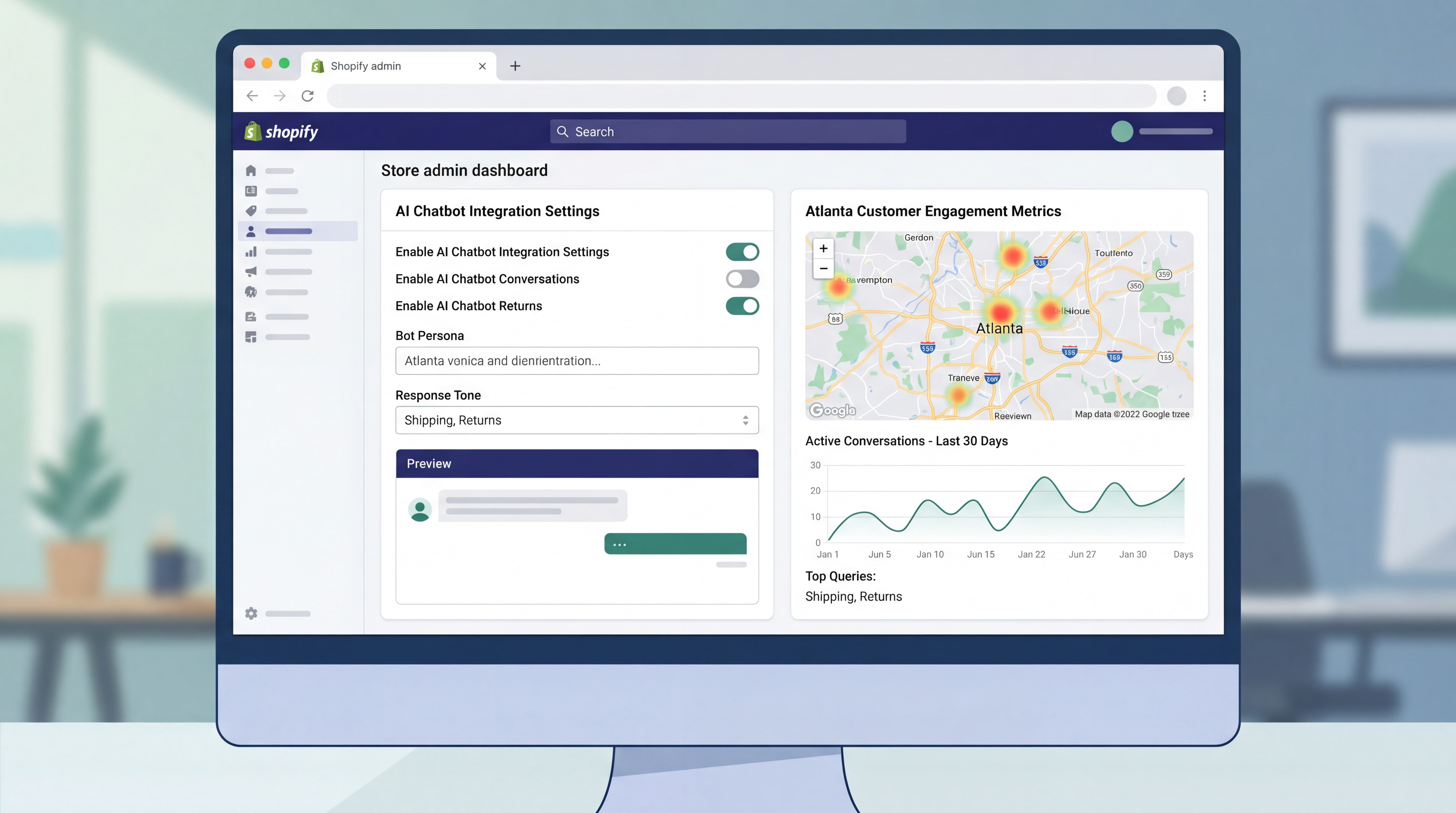
If you're running a Shopify store and targeting Atlanta customers, the combination of local SEO and chatbot integration is particularly powerful. Shopify's native integrations and third-party apps make it straightforward to add a chatbot that can handle product questions, order status, and local delivery inquiries — all without adding headcount.
Shopify has been expanding its AI capabilities rapidly. Merchants can now connect their stores to AI-powered chat interfaces that handle customer service at scale. For Atlanta ecommerce businesses, this means you can compete with larger retailers on service quality while keeping overhead lean.
The practical setup: install a chatbot app from the Shopify App Store (Tidio, Gorgias, and Intercom all have strong local business configurations), connect it to your product catalog, and configure it with Atlanta-specific responses — local pickup options, delivery zones, neighborhood-specific promotions.
📊 Shopify stores using AI chatbots report 23% higher conversion rates and 31% reduction in support ticket volume – Shopify Chatbot Adoption
FAQ
How much should an Atlanta small business budget for local SEO in 2026?
For most Atlanta small businesses in moderately competitive industries, a budget of $700–$1,200 per month is the sweet spot. This covers professional GBP management, ongoing citation work, basic content creation, and monthly reporting. Businesses in highly competitive niches — legal, medical, home services — should budget $1,500–$2,500 to compete effectively. Before committing to any budget, get a free SEO audit to understand your current baseline and what it will realistically take to move the needle.
What's the difference between local SEO and Google Maps SEO?
They're closely related but not identical. Local SEO is the broader practice of optimizing your online presence to rank in location-based searches — including your website, citations, and reviews. Google Maps SEO specifically focuses on ranking in the Local Pack (the map results that appear at the top of local searches). Google Maps rankings are driven by three factors: relevance (do you offer what they're searching for?), distance (how close are you to the searcher?), and prominence (how well-known and trusted is your business online?). A complete local SEO strategy addresses all three.
Can I do local SEO myself, or do I need to hire an agency?
You can absolutely handle the fundamentals yourself — GBP optimization, review requests, basic citation building, and on-page SEO. The tasks that genuinely benefit from professional help are local link building, technical SEO audits, and competitive content strategy. A hybrid approach works well for many Atlanta businesses: do the free fundamentals yourself, then hire an agency for the high-skill work.
How long does it take to see results from local SEO in Atlanta?
For Google Maps rankings, most businesses see measurable movement within 60–90 days of implementing a solid strategy. Website rankings for competitive keywords take longer — typically 4–6 months. The businesses that see the fastest results are those that have their fundamentals locked in (complete GBP, consistent citations, strong review velocity) before they start investing in more advanced tactics.
Are AI chatbots worth the investment for a small Atlanta business?
Yes — with the right setup. The key is not deploying a generic chatbot, but one configured specifically for your business and local service area. A well-built chatbot can capture leads after hours, reduce bounce rate (which helps your SEO), and handle routine customer questions without adding staff. Most small business chatbot tools run $50–$200/month, which is easily justified if it captures even one or two additional leads per week.
Key Statistics
📊 The top 3 Google Maps results capture 44% of all clicks on local search pages – Google Maps Local Pack CTR
📊 76% of people who search for something nearby on their smartphone visit a related business within 24 hours — making Google Maps SEO the most direct path from search to sale. (Source: Google Consumer Insights 2026)
💡 $1,200/month is the median spend for Atlanta small businesses working with a local SEO agency in 2026 — but businesses that audited their SEO first reduced wasted spend by an average of 34%. (Source: BrightLocal Agency Survey 2026)
📍 46% of all Google searches have local intent — meaning nearly half of every search is an opportunity for a properly optimized Atlanta business to show up. (Source: Search Engine Land 2026)
Related Insights
- Why Your Website Isn't Ranking in Atlanta — And How to Fix It
- AI Chatbots Just Changed Again: What Atlanta Small Businesses Must Know Right Now
- Advanced Web Design in Atlanta: The Optimization Playbook That Actually Moves Rankings
Ready to Stop Guessing and Start Ranking?
You now have a practical framework for managing your local SEO costs in Atlanta — from the free fundamentals you can implement today to the paid investments that deliver real ROI. The next step is understanding exactly where you stand right now.
We'll show you precisely what's holding your Atlanta business back from ranking — and give you a clear, prioritized roadmap to fix it. No fluff, no generic reports, no sales pressure. Just honest analysis from a team that knows the Atlanta market.