
Essential Website
More room to explain your services, with a custom homepage and a blog.
$1,495 one-time
- Up to 8 pages
- Custom-designed homepage
- Blog set up and ready to publish
- Local business schema and Google Business Profile link
Dealers, brake shops, detailers and tow operators all serve drivers but win customers differently, so we shape your outreach around the way your own buyers shop.
How it works
Prefer to talk? Call 678-935-6401 See our work
Tell us a little about your business and what you need help with. We reply to set up a time to talk.
We will reply soon to set up a time for your free strategy call.
Automotive marketing covers very different businesses. A used-car dealer, a brake shop, a collision center, a mobile detailer, a tow operator and a tire shop all serve drivers, but their customers search, compare and decide in completely different ways. Infinite Marketing helps Atlanta-area automotive businesses build marketing around the way their own customers actually buy.
This page is the overview. If you run a repair shop or a body shop, our dedicated pages on SEO for auto repair shops and collision repair marketing go deeper.
Most automotive purchases start with a moment, not a plan. A warning light comes on during the commute on I-285. A tire goes flat in a parking deck. A fender gets crumpled at a four-way stop. Someone decides it is finally time to trade in. Each moment produces a different kind of search, and each one rewards a different kind of marketing.
A single generic “auto services” website cannot serve all of these well. Good automotive marketing starts by deciding which moments your business wins and then building pages, profiles and follow-up for exactly those moments.
The problems we see most often are practical rather than creative. A shop’s Google Business Profile lists the wrong hours or a primary category that does not match its main work. A website has one “services” page that lists twenty repairs in a single paragraph, so none of them can rank or answer a customer’s question. Phone calls ring out during lunch or after closing, and nobody calls back. Reviews arrive in bursts, then stop for months. Dealers often face a different problem: inventory pages that load slowly on phones or lose tracking when they come from a third-party feed.
Fixing these basics usually matters more than any new campaign, because every ad dollar and every search visit eventually lands on the same profile, page and phone line.
Maps visibility, a page for each major repair type, clear hours and a phone line that gets answered. Reviews that mention specific repairs help customers trust a shop they have never visited.
Trust signals, a simple photo estimate request, and plain explanations of how insurance claims work with your shop. The decision often happens while the car is undrivable.
Fast, accurate inventory pages, paid search tied to models you actually stock, and lead routing so internet inquiries reach a salesperson quickly. Advertised prices and terms must be accurate and properly disclosed.
Click-to-call above everything else, an accurate service area and a way to answer calls at any hour. AI phone agents can capture location and vehicle details when dispatch is busy.
Pages for the brands and services you offer, such as alignments, TPMS and seasonal tires, plus a way to request a quote by tire size.
Strong photo galleries, package pages and online booking. Social media matters more here than in most automotive categories because the work is visual.
Audit and correct your Google Business Profile, including categories, services, hours, photos and service area. Check that your name, phone and address match across major directories. Install call and form tracking so you can see which channels actually produce customers.
Create or rewrite service pages for the work you most want more of, with honest explanations, clear next steps and click-to-call on mobile. Set up a simple process to ask satisfied customers for reviews.
Where it makes sense, launch tightly targeted Google Ads for high-intent services, and add automated text or email follow-up for missed calls and unbooked estimates. Review the tracking data and adjust before spending more.
This is a starting sequence, not a guarantee of results. Search visibility depends on competition, your location, your reviews and many factors no agency controls.
Automotive advertising has rules worth respecting. Dealers must make sure advertised prices, fees and financing terms are accurate and include the disclosures required by federal and Georgia law. Repair and collision shops should avoid implying manufacturer or insurer endorsement they do not have. If you use customer photos or vehicle images, get permission and blur license plates where appropriate. Review requests should go to all customers, not only the happy ones, and should never be paid for. We are a marketing agency, not a law firm, so check specific advertising questions with your own counsel.
The owner of Infinite Marketing also operates Infinite Auto Network, an automotive shop network and directory. If you run an automotive business, you can learn more about Infinite Auto Network and visit the site for current features.
No. We work with repair shops, collision centers, dealers, detailers, towing companies and tire shops. The plan changes with the business type, because the customer journey changes.
Usually both, in sequence. SEO and your Google Business Profile build visibility that compounds over time, while ads can fill the calendar for specific high-value services sooner. If your website and phone handling are weak, fix those first so ad clicks are not wasted.
Yes. We set up AI phone agents and voice chatbots that can greet callers, collect vehicle details and book or route requests. They work best as a backup to your team, not a replacement for a service advisor.
It varies. Profile and website fixes can affect call volume relatively quickly, while organic rankings take longer and are never guaranteed. We focus on tracking so you can see what is changing and why.
We are based in Atlanta and focus on the metro area, including communities such as Marietta, Decatur, Conyers and Douglasville. Contact us if your business is elsewhere.
They become urgent and local. A warning light on the commute or a flat tire in a parking deck produces short searches from a phone, often on the side of the road, and the driver wants a phone number and an arrival time. Click-to-call, accurate hours and a clear service area matter most here. We also have pages for individual communities, such as digital marketing in Sandy Springs.
Because every ad dollar and every search visit lands on the same profile, page and phone line. The problems we see most are practical: a Business Profile with wrong hours or a mismatched primary category, a single services page listing twenty repairs, calls that ring out at lunch, and reviews that stop for months. Fixing those usually matters more than anything new, and much of it is covered by our local search visibility work.
Dealers serve research-heavy shoppers who browse inventory across several sites for days or weeks before calling. That calls for fast, accurate inventory pages, paid search tied to models you actually stock, and lead routing so internet inquiries reach a salesperson quickly. A common problem is inventory pages that load slowly on phones or lose tracking when they come from a third-party feed. If your site has that problem, a dealer website redesign may be worth considering.
Put click-to-call above everything else and make sure someone, or something, answers at any hour. The searcher is often on the side of the road and wants a phone number and an arrival time, along with an accurate service area. When dispatch is busy, AI phone agents can capture the caller’s location and vehicle details so the request is not lost. See how our AI phone and chat agents handle this.
Pages for the brands and services you offer, such as alignments, TPMS and seasonal tires, plus a way to request a quote by tire size. A separate page for each main service gives customers a direct answer instead of a general list, and the tire size field keeps quote requests specific. Add an accurate service area and hours to your Business Profile so nearby drivers can find you.
Because the work is visual. Detailing, tint and ceramic coating buyers look at photos, before-and-after results and package options before they decide, and they often book online. Strong photo galleries, clear package pages and online booking do more for these businesses than they would for a tow operator. Get permission before using customer vehicle images and blur license plates where appropriate.
Days 1 to 30 fix the foundation: your Business Profile, consistent name, phone and address across directories, and call and form tracking. Days 31 to 60 build or rewrite service pages and start a simple review process. Days 61 to 90 add tightly targeted Google Ads where it makes sense and automated follow-up for missed calls and unbooked estimates. It is a starting sequence, and results depend on competition, location and reviews.
Dealers must keep advertised prices, fees and financing terms accurate and include the disclosures required by federal and Georgia law. Repair and collision shops should avoid implying manufacturer or insurer endorsement they do not have. Review requests should go to all customers, not only happy ones, and should never be paid for. We are a marketing agency, not a law firm, so check specific questions with your own counsel.
The owner of Infinite Marketing also operates Infinite Auto Network, an automotive shop network and directory. It is a separate site from this agency. If you run an automotive business, you can visit the Infinite Auto Network site to see its current features and decide whether it fits alongside the marketing work described on this page.
It depends on the services your business needs. Packages with an approved fixed price can be bought online, and combinations such as profile work, new service pages and Google Ads management are priced through a written custom quote. One-time fees appear separately from monthly services, which are not charged at checkout. Your ad budget is a separate decision. Current packages are listed on our pricing page.
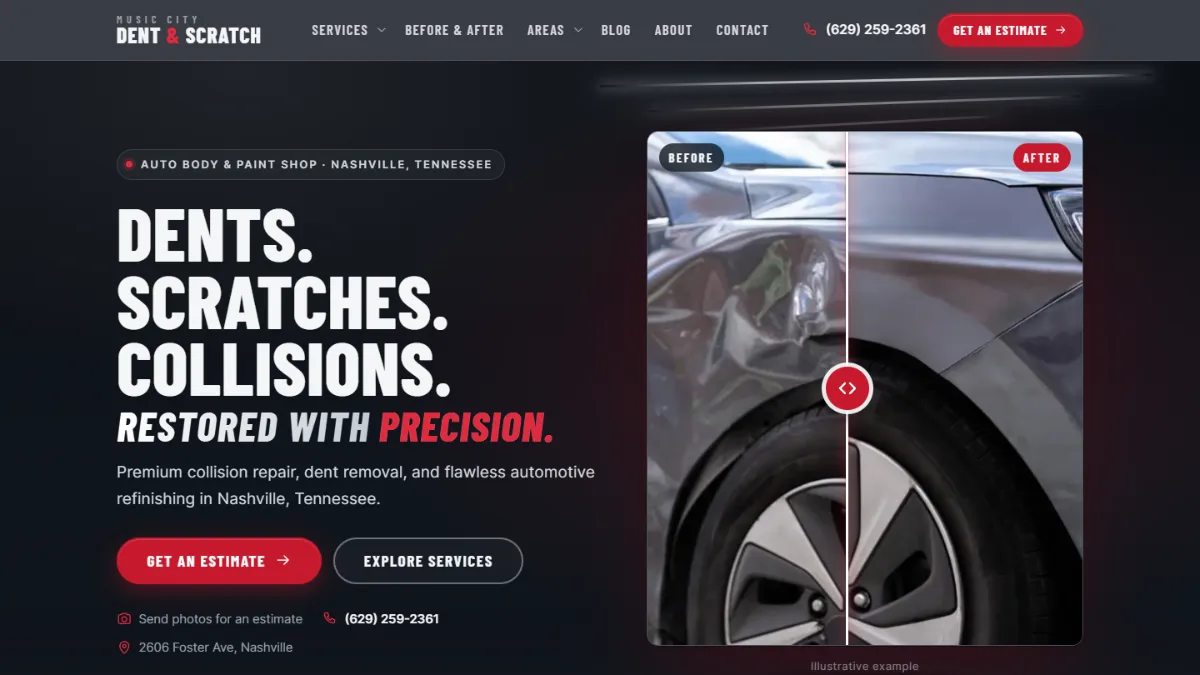
Automotive

A site for an auto body and paint shop on Foster Ave in Nashville: dents, scratches, paint and collision repair, with estimates from photos of the damage.
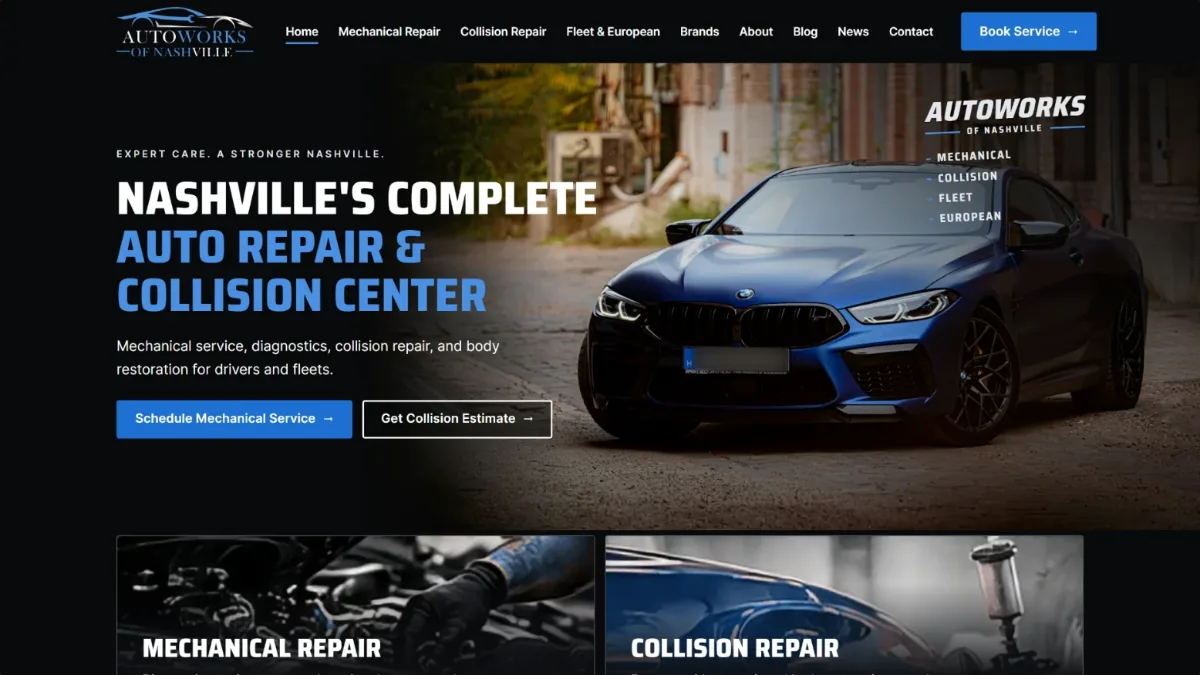
Automotive
A site for an auto repair and collision center on Lebanon Pike in Nashville. Mechanical customers and collision customers each get their own path from the first screen.
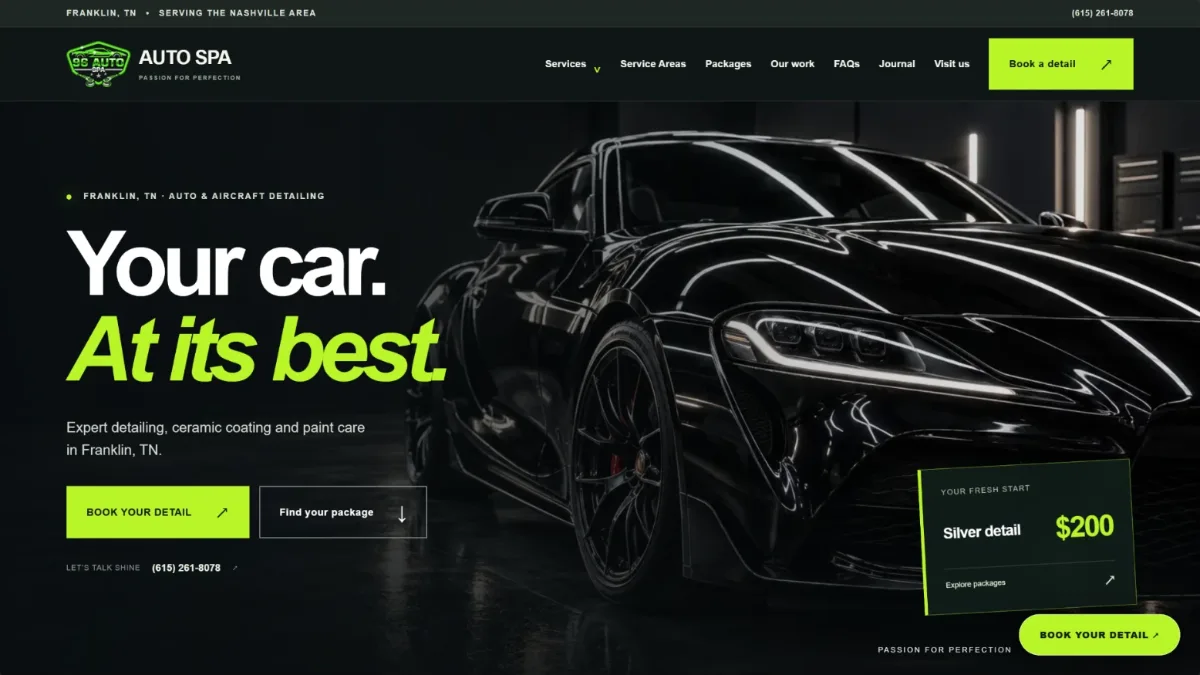
Automotive
A site for a detailing shop in Franklin that also polishes aircraft. Visitors compare packages and book their next detail.