For a small business, the phone is often the most valuable lead channel and the hardest one to staff. The comparison of AI phone agents vs. traditional receptionists comes down to one question: which calls do you need answered, when, and how well?
AI phone agents have improved a lot. They can now hold natural conversations, answer common questions, collect details, and book appointments. That does not make receptionists obsolete. A skilled front-desk person brings judgment, warmth, and local knowledge that software does not fully replicate. This guide lays out the tradeoffs fairly, explains hybrid models, and shows how to decide.
What an AI phone agent actually does
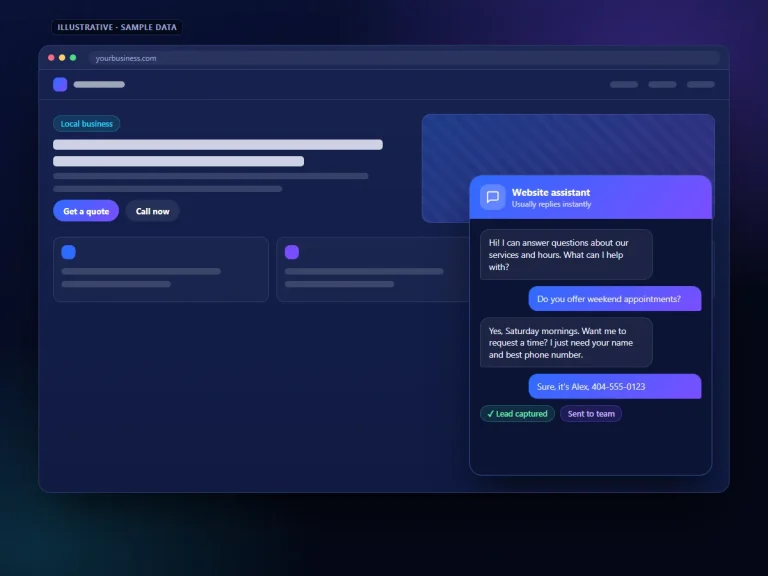
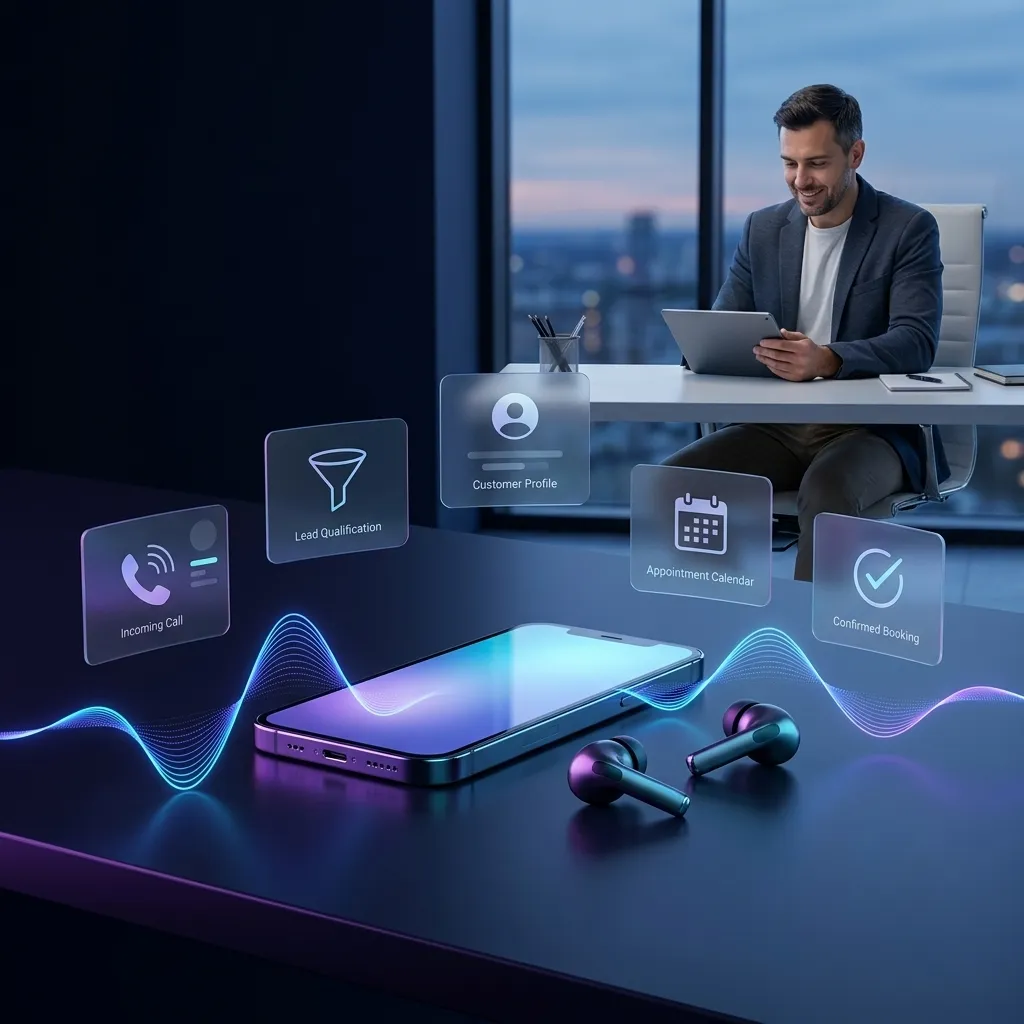
An AI phone agent is software that answers calls with a synthesized voice, understands what the caller says, and responds based on instructions and information you provide. Depending on how it is set up, it can:
- Greet callers and identify the reason for the call
- Answer routine questions about hours, service areas, services, and next steps
- Collect the caller’s name, number, address, and job details
- Check availability and book or request appointments through a connected calendar
- Transfer to a person when a call meets rules you define, such as an emergency or an existing client
- Send a summary to your team and log the call in your CRM
What it should not do is improvise beyond what it has been given. A well-configured agent says “I’ll have someone call you back about that” instead of guessing at a price or a diagnosis.
AI phone agents vs. traditional receptionists, side by side
| Factor | AI phone agent | Human receptionist |
|---|---|---|
| Availability | Can answer around the clock, including nights, weekends, and holidays | Limited to scheduled hours unless you staff shifts or use an answering service |
| Simultaneous calls | Can typically handle several calls at once, depending on the plan and phone setup | One call at a time; others go to hold or voicemail |
| Consistency | Follows the same script and rules every time | Varies with experience, mood, and workload |
| Judgment and empathy | Limited; handles expected situations well, unusual ones less well | Strong; can read tone, calm upset callers, and make exceptions |
| Complex or sensitive calls | Should escalate rather than resolve | Can handle, negotiate, and follow up personally |
| Other duties | Phone and messaging only | Can greet walk-ins, handle paperwork, and support the team |
| Cost structure | Usually a subscription plus usage, and setup time | Wages, payroll taxes, benefits, training, and coverage for time off |
| Setup and upkeep | Needs a clear knowledge base, call rules, and regular review of transcripts | Needs hiring, training, and management |
| Data capture | Can log every call with a transcript or summary automatically | Depends on discipline with notes and the CRM |
Costs for both options vary widely by provider, call volume, and local labor market, so we have not listed numbers. Compare the total cost of covering the hours you actually need, not just the headline price.
Where AI phone agents are strongest
After-hours and overflow calls
Home service companies, auto repair shops, and medical or legal offices often get calls when no one can pick up: early mornings, evenings, and during lunch rushes. Every unanswered call is a chance for the caller to try the next business on the list. An AI agent that answers, captures details, and books or schedules a callback keeps those conversations alive.
Repetitive questions
“Are you open Saturday?” “Do you service my area?” “How do I get an estimate?” When a receptionist spends much of the day on the same questions, an AI agent can handle those and free the person for work that needs a human.
Structured intake
When you need the same information from every caller, such as vehicle year and model, the type of plumbing problem, or the address of a job, an AI agent asks every question every time and passes clean notes to your team.
When a human receptionist is the better choice
- High-stakes or emotional calls. Someone calling a law firm after an accident, or a patient worried about symptoms, often needs a calm person, not a menu of options.
- Relationship-driven businesses. If regular clients expect to hear a familiar voice and be recognized, a person maintains that relationship better.
- Calls that need judgment or exceptions. Pricing negotiations, scheduling conflicts that require reshuffling a technician’s day, and complaints are better handled by someone with authority.
- Mixed front-desk roles. If the same person greets walk-ins, handles payments, and keeps the office running, removing that role to save on phones may cost more than it saves.
- Callers who prefer a person. Some customers will hang up on any automated system. Know your audience.
Hybrid models that work well
For many small businesses, the answer is not either-or. Common hybrid setups include:
AI after hours, human during the day
Your receptionist covers business hours. The AI agent picks up nights, weekends, and holidays, books appointments or flags urgent issues, and hands a clean list to the team each morning.
AI for overflow
When the front desk is already on a call, the next caller reaches the AI agent instead of voicemail. Busy periods stop turning into missed calls.
AI first, human escalation
The AI agent answers every call, handles routine requests, and transfers to a person based on rules: emergencies, existing clients, or anyone who asks for a human.
Human first, AI follow-up
People answer the phones, and AI handles text or call follow-up for missed calls, reminders, and confirmations.
How to decide for your business
-
Look at your call data
Pull a few weeks of call logs from your phone provider. When do calls come in? How many go unanswered? What are people calling about? This tells you whether your problem is coverage, volume, or quality.
-
Sort calls by type
Group calls into routine (hours, directions, booking), structured (intake for a quote), and complex (complaints, negotiations, sensitive matters). Routine and structured calls are good candidates for AI. Complex calls belong with a person.
-
Define escalation rules
Write down which calls must always reach a human and how quickly. Test that transfers actually work before going live.
-
Start with a limited scope
Many businesses begin with after-hours or overflow coverage, review transcripts weekly, and expand once they trust how the agent handles real callers.
-
Measure what matters
Track answered calls, booked appointments, transfers, and caller complaints. Compare against your baseline before deciding to expand or pull back.
Honest caveats before you switch
AI phone agents can misunderstand accents, background noise, or unusual requests. They are only as accurate as the information you give them, so an outdated knowledge base means outdated answers. Recording and transcribing calls raises consent and privacy questions that vary by state and by industry, especially in healthcare and legal work, so check the rules that apply to you and get advice if you are unsure. If you plan to use AI for outbound calls, federal robocall and telemarketing rules apply, and the FCC has stated that AI-generated voices are covered by those rules.
None of this is a reason to avoid AI. It is a reason to set it up carefully, with clear limits and a person reviewing how it performs. The free NIST AI Risk Management Framework is a useful reference if you want a structured way to think through those limits.
If you want to see how this works in practice, our AI phone agents page explains setup and call routing, and AI voice chatbots covers voice assistants on your website through Infinite Chats Calls.
Frequently asked questions
Will callers know they are talking to an AI?
Many will, and being upfront is the better practice. A short disclosure in the greeting sets expectations and builds trust, and callers who want a person can ask for one.
Can an AI phone agent book directly into my calendar?
Often, yes, if your scheduling tool or CRM supports an integration. Where it does not, the agent can capture a preferred time and send a request for your team to confirm.
Does an AI phone agent replace an answering service?
It can cover many of the same tasks, such as taking messages and routing urgent calls. Some businesses keep a live answering service for specific call types and use AI for the rest.
How long does setup take?
It depends on how many services, rules, and integrations are involved. The bulk of the work is writing accurate answers and escalation rules, then testing with real scenarios.